Hot Keywords:
- All
- Product Name
- Product Keyword
- Product Model
- Product Summary
- Product Description
- Multi Field Search

Views: 50 Author: Melody Publish Time: 2026-09-29 Origin: Site


Choosing the right HVAC filter can be confusing. MERV 8, 11, 13 and 16 represent different levels of particle capture.
A higher MERV rating generally captures smaller particles more effectively. However, it may also increase airflow resistance.
The best filter is not always the highest-rated one. Your HVAC system must support the filter's airflow and pressure drop requirements.
This MERV rating chart helps you compare MERV 1–16 filters and understand which level may suit your application.

It is a filter efficiency rating system developed by ASHRAE to classify the ability of air filters to capture particles of different sizes.
MERV ratings are commonly used for HVAC air filters in:
Residential systems
Commercial buildings
Industrial ventilation
Air handling units
The MERV scale generally ranges from MERV 1 to MERV 16 for common HVAC applications.
Higher MERV ratings indicate improved particle capture efficiency, especially for smaller airborne particles.
However, MERV rating alone does not determine overall filter performance.
A complete evaluation should also consider:
Filter structure
Media area
Airflow resistance
Pressure drop
Dust-holding capacity

Important:
MERV ratings should be selected according to the HVAC system capability and application requirements. A higher MERV rating is not automatically better if the system cannot handle the increased airflow resistance.

MERV 8–11
These filters provide a balance between:
Dust control
Airflow performance
Maintenance frequency
They are commonly used in homes where basic indoor air quality improvement is needed.
MERV 11–13
Commercial spaces often require stronger filtration because of:
Higher occupancy
More frequent air circulation
Greater indoor air quality requirements
Applications may include:
Offices
Schools
Retail buildings
Public facilities
MERV 13–16 or higher efficiency filtration systems
Industrial applications may require different filtration stages depending on:
Particle levels
Process requirements
Air quality standards
Equipment protection needs
These four ratings are among the most commonly searched MERV levels.

MERV 13 provides stronger filtration performance than MERV 8, but the correct choice depends on the HVAC system.
A MERV 13 filter may be suitable when stronger particle filtration is required.
However, some systems designed for lower-resistance filters may not perform correctly if a much higher-resistance filter is installed without checking compatibility.
The right question is not:
"What is the highest MERV rating?"
The better question is:
"What MERV rating provides the required filtration while maintaining proper airflow?"
As filtration efficiency increases, filter media may become more structured or dense, which can increase airflow resistance.
This resistance is commonly measured as:
Pressure Drop
Higher-efficiency filters can create more airflow resistance. This resistance is measured as pressure drop.
Actual pressure drop depends on filter media, surface area, design and airflow. A filter with excessive resistance may affect fan performance and HVAC operation.
When choosing a MERV filter, balance filtration efficiency with airflow and system compatibility.

A common misunderstanding is that HEPA is simply “MERV 17 or higher”.
This is incorrect.
HEPA uses a different classification system and is generally selected for applications requiring much higher filtration performance.
Related Guide:
MERV vs HEPA Filters: What’s the Difference and Which One Should You Choose?
Determine what type of particle control is needed.
Consider:
Indoor air quality goals
Building type
Occupancy level
Environmental conditions
Before upgrading to a higher MERV filter, check:
Fan capacity
Available filter space
Recommended airflow
Pressure drop limitations
A filter must work with the complete HVAC system.
Important specifications include:
Length
Width
Depth
Frame material
Filter media
Installation method
Incorrect sizing may allow air bypass around the filter.
Different structures provide different advantages.
Suitable for:
Residential HVAC
Commercial systems
General ventilation
Advantages:
Compact design
Increased filtration area
Multiple MERV options
Suitable for:
Commercial HVAC
Air handling units
Medium-efficiency filtration
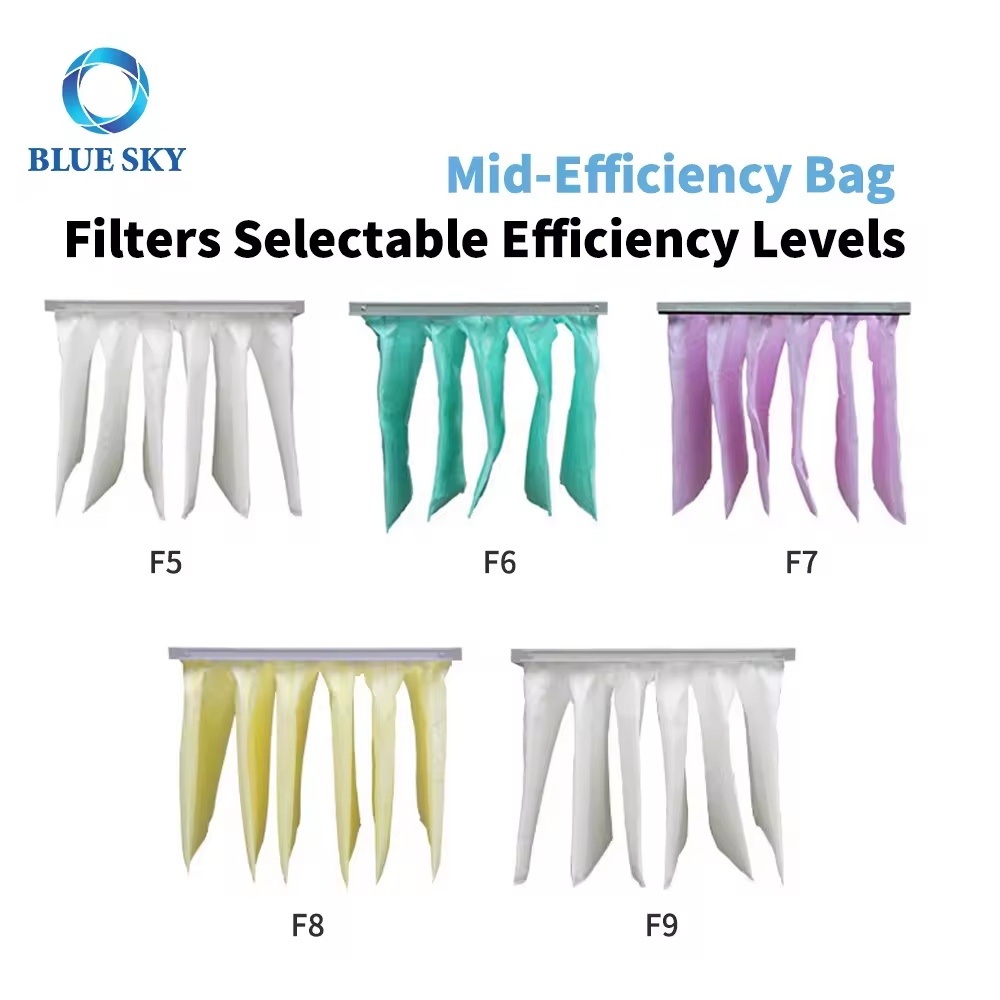
Advantages:
Large filtration area
Higher dust-holding capacity
Suitable for continuous airflow applications
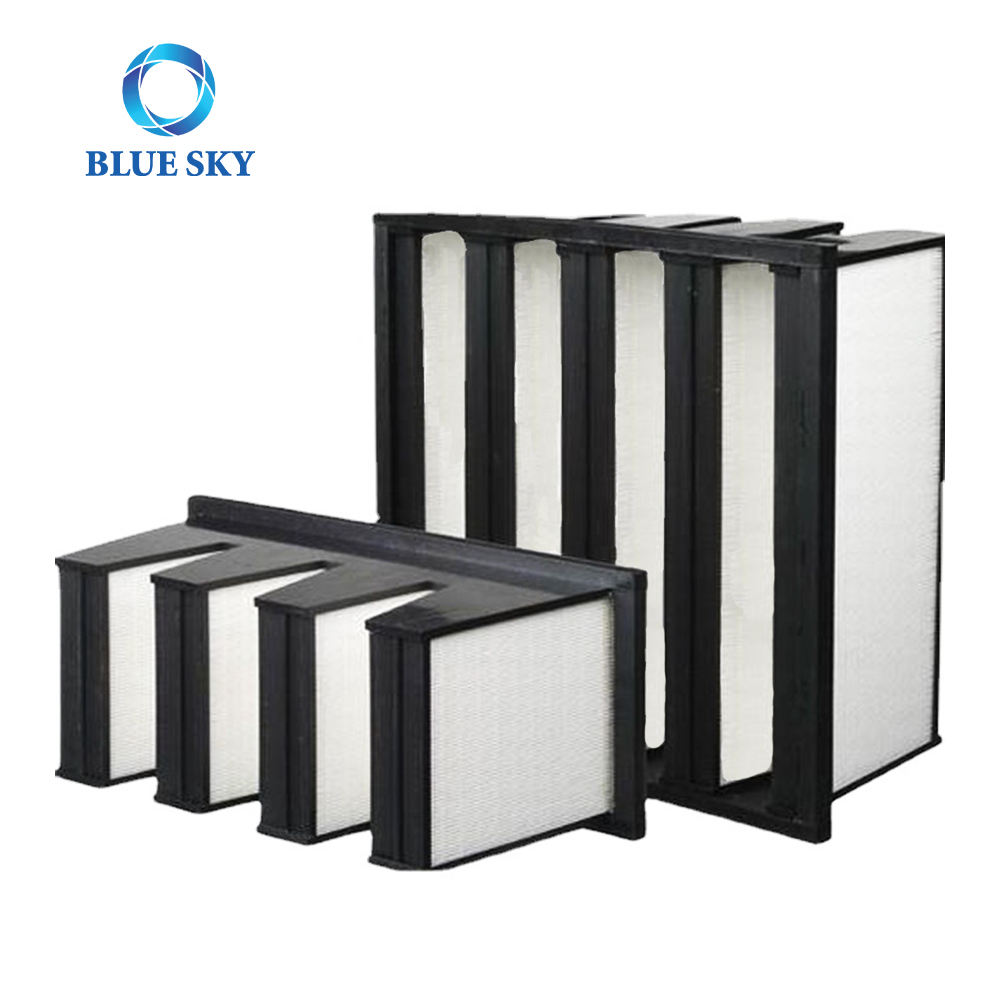
Suitable for:
High-efficiency applications
Industrial environments
Systems requiring advanced filtration
Target MERV rating
Airflow requirements
Pressure drop requirements
Filter dimensions
Media selection
Frame materials
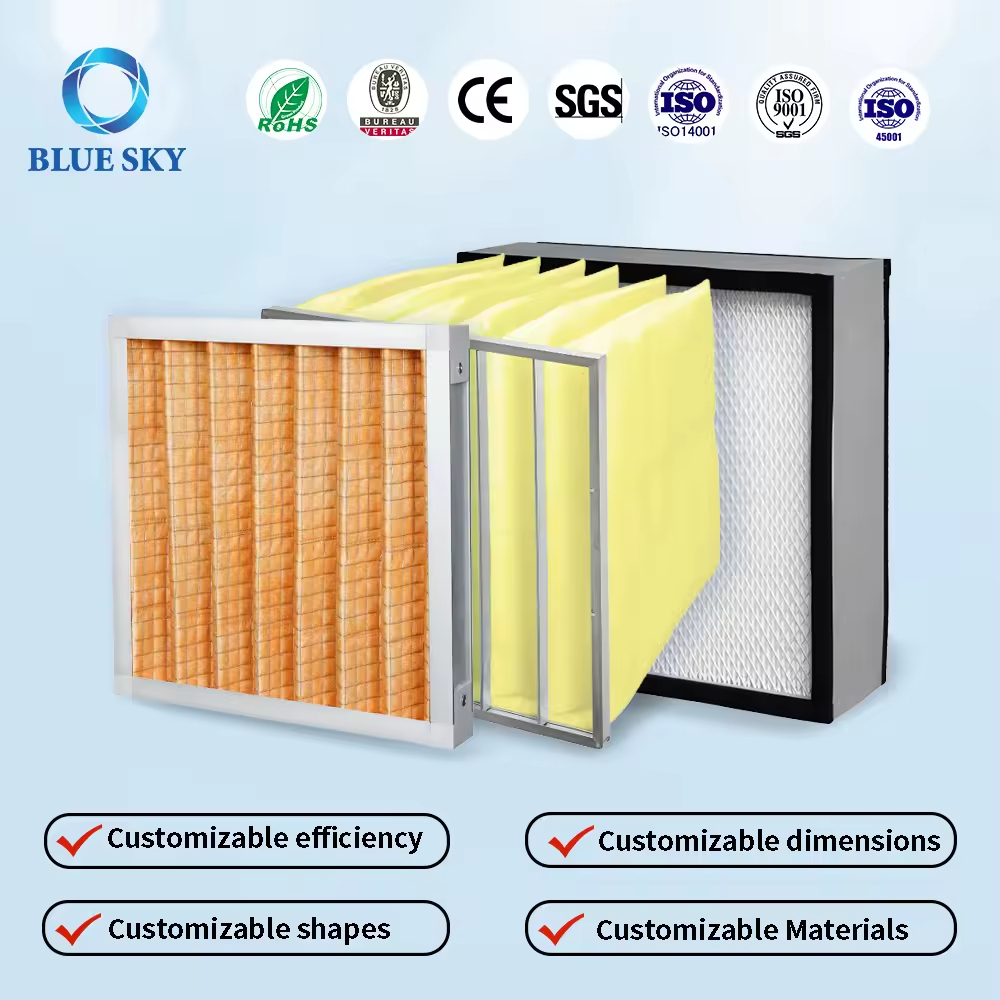
Available solutions include:
Suitable for applications requiring different efficiency levels and compact installation.

Designed for commercial and industrial HVAC systems requiring larger filtration areas.
Designed for applications requiring advanced filtration performance and higher airflow capacity.
For OEM and project-based applications, buyers can provide:
Filter dimensions
Required MERV level
Airflow conditions
Pressure drop target
Application environment
Blue Sky Filter can evaluate the suitable filter structure and media configuration.
Need a custom HVAC filter matched to a target MERV rating, airflow and pressure drop? Send us your required dimensions and operating conditions for evaluation.


What does MERV stand for?
MERV stands for Minimum Efficiency Reporting Value. It is a rating system used to classify HVAC air filter efficiency.
Is MERV 13 better than MERV 8?
MERV 13 provides higher particle filtration efficiency than MERV 8, but the correct choice depends on HVAC system compatibility and airflow requirements.
Can I replace a MERV 8 filter with MERV 13?
Not always. The HVAC system should be checked to confirm that it can handle the higher airflow resistance.
Does a higher MERV rating increase pressure drop?
Higher MERV ratings may increase resistance, but actual pressure drop also depends on filter design, media area, structure and airflow.
Is MERV 16 the same as HEPA?
No. MERV 16 and HEPA use different classification systems and are designed for different application requirements.
What MERV rating is commonly used in commercial buildings?
Many commercial buildings use MERV 11–13 filters, depending on the building design and air quality requirements.
Choose based on:
Required filtration level
HVAC compatibility
Airflow
Pressure drop
Filter dimensions
Application environment
MERV ratings help buyers compare HVAC filter efficiency, but the highest rating is not always the right choice.
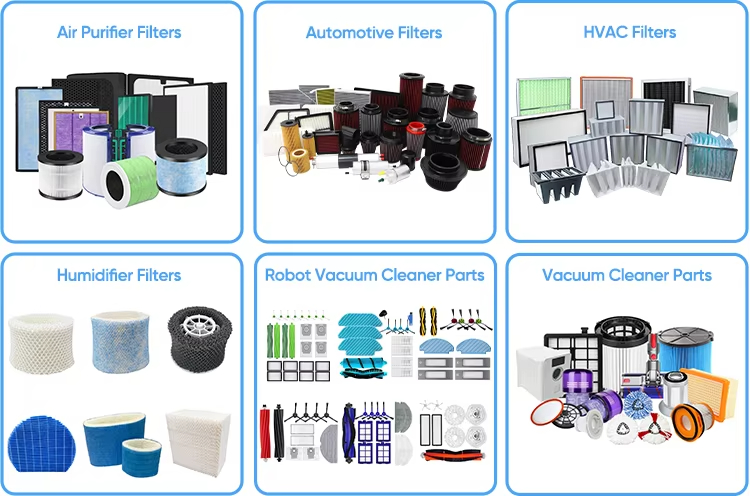
Consider filtration needs, airflow, pressure drop and system compatibility together. Blue Sky Filter provides pleated, pocket and high-efficiency filter solutions, with customized options for different applications.


If you want to see our updates in real time on social media, you can follow the following accounts.
LinkedIn: linkedin.com/company/blueskyfilter
Twitter: twitter.com/blueskyfilter
Facebook: www.facebook.com/blueskyfilter.manufacturer/
Youtube: www.youtube.com/@blueskyfilter
Instagram: https://www.instagram.com/nanjingblueskyfilters/


