Hot Keywords:
- All
- Product Name
- Product Keyword
- Product Model
- Product Summary
- Product Description
- Multi Field Search

Views: 50 Author: Site Editor Publish Time: 2026-07-08 Origin: Site


A filter usually does not get much attention when a machine is new. It sits quietly inside an air purifier, vacuum cleaner, humidifier, floor cleaner, robot vacuum or other household appliance, doing its work in the background.
But after weeks or months of use, the filter may suddenly become noticeable. The machine smells different. The airflow feels weaker. Dust returns faster. Moisture stays inside the machine. The filter looks gray, dark, stiff or clogged.
These problems are common, and they do not always mean the appliance is broken. In many cases, the filter has simply reached a point where it needs cleaning, drying or replacement.
This guide explains why filters may smell, why airflow can become weaker, how moisture and dirt affect filter performance, when a filter should be replaced, and what buyers should check before choosing replacement filters or maintenance parts.
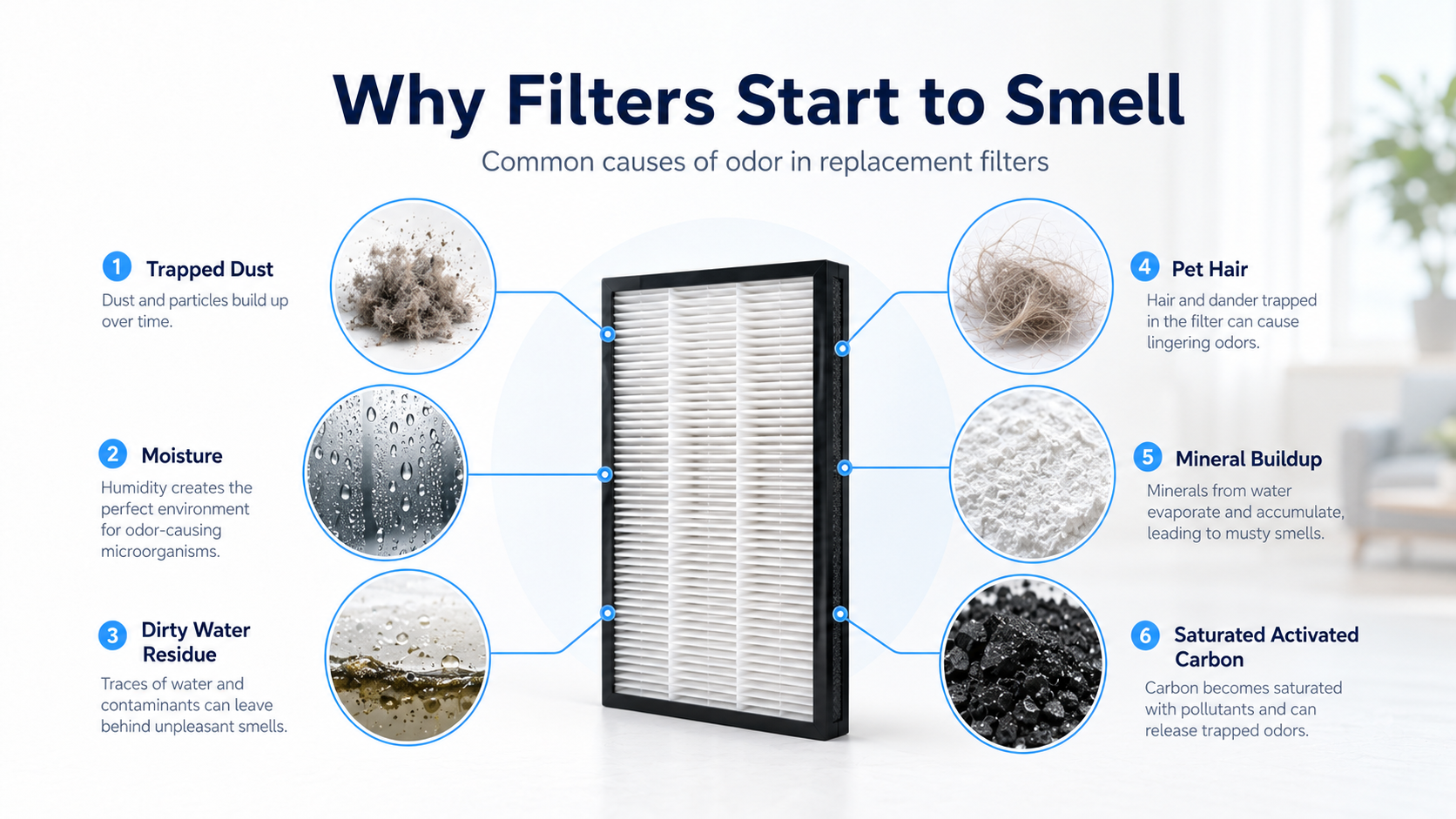
Filters collect what the machine is designed to remove. That may include dust, pet hair, pollen, food residue, dirty water particles, moisture, mineral buildup, odor molecules or fine debris.
Over time, these materials can stay inside the filter structure. If the filter is dry, clean and regularly maintained, the problem may not be obvious. But when dirt, moisture and poor ventilation come together, odor can appear.
Common reasons filters develop odor include:
Dust and debris trapped inside the filter
Moisture left in the filter after use
Dirty water residue near the filter area
Pet hair or organic residue collected during cleaning
Old filter material that no longer dries well
Mineral buildup from hard water
Activated carbon layer becoming saturated
Poor storage in a closed or damp environment
A filter smell is often a sign that the filter is holding more than it should. Cleaning may help in some cases, but if the odor remains, replacement may be the better choice.
Many filter problems are not caused by dust alone. Moisture is often the hidden reason behind unpleasant smells.
This is especially common in wet dry floor cleaners, humidifiers, steam cleaning accessories, washable vacuum filters and any appliance that handles water or damp residue.
When moisture remains inside a filter, pad, tank or cartridge, it can create a stale or musty smell. If the machine is stored before the part is fully dry, odor may become stronger the next time it is used.
Moisture-related odor may appear when:
A washable filter is installed before drying completely
A dirty water tank is stored closed after use
A humidifier filter stays wet for too long
A floor cleaner roller brush remains damp
A foam filter holds water inside its pores
A machine is stored in a warm and poorly ventilated space
Drying is not just a small after-use detail. For many filters and maintenance parts, drying is part of odor control.
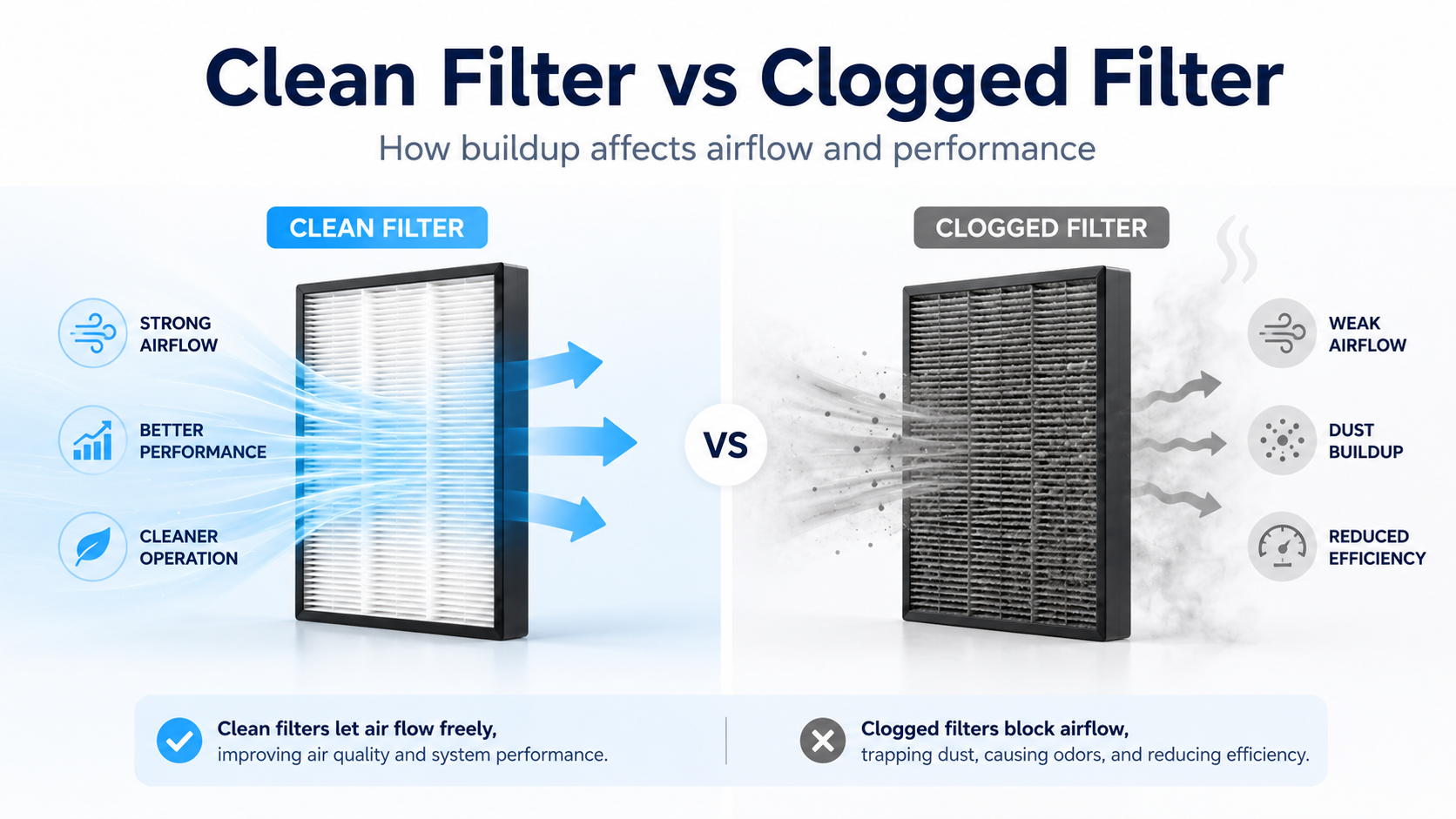
Most filters are designed to let air, water or mist pass through while capturing unwanted particles or residue. When the filter becomes clogged, the passage becomes narrower.
A clogged filter may cause:
Weak airflow
Lower suction
Slower humidification
Reduced mist output
More machine noise
Overheating risk in some appliances
Dust or residue returning to the room
Poor cleaning performance
For example, a vacuum cleaner may lose suction when the filter is blocked with fine dust. An air purifier may move less air when its filter is heavily loaded. A humidifier may produce less moisture when the wick filter becomes hardened by minerals.
The filter does not need to look completely blocked to affect performance. Even a thin layer of dust, mineral scale or residue can change airflow.
It is important to separate two different issues: filtration and odor control.
A filter may still capture particles but smell bad. Another filter may not smell at all but may already be clogged and restricting airflow. Odor and performance do not always change at the same speed.
Different materials have different roles:
| Filter or Material Type | Main Role | Common Maintenance Concern |
| HEPA Filter Media | Helps capture fine dust and particles | May clog with fine dust over time |
| Foam or Sponge Filter | Helps capture larger dust and debris | May hold moisture if not dried well |
| Activated Carbon Layer | Supports odor reduction | May lose effect after saturation |
| Wick Filter | Absorbs water for evaporation | May harden from minerals |
| Demineralization Cartridge | Helps reduce minerals in water | May become less effective over time |
| Deodorization Module | Supports odor control | May need replacement when effect weakens |
This is why one cleaning method does not work for every filter. A foam filter, carbon filter, HEPA filter, wick filter and deodorization module should not be treated as the same part.
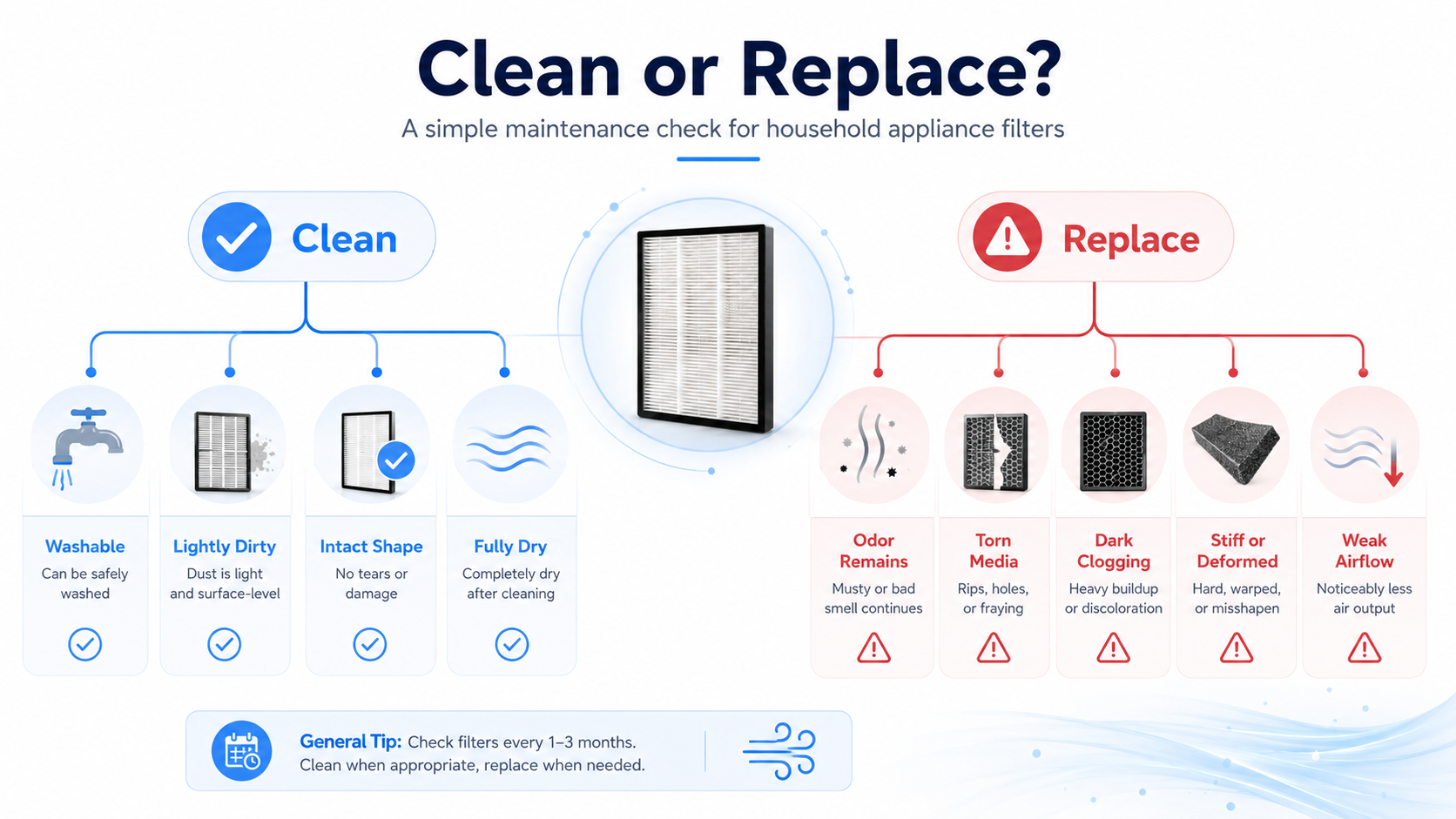
Cleaning may be enough when the filter is lightly dirty, still in good shape and designed to be cleaned.
A filter may be cleaned when:
It is marked as washable or rinseable
The frame is not damaged
The filter media is not torn
Odor is mild and disappears after drying
Dust can be removed without damaging the material
The filter returns to normal shape after cleaning
If a filter is washable, it should be cleaned gently and dried completely before reuse. Strong brushing, hot water, harsh chemicals or twisting may damage the structure.
A clean-looking filter is not always a good filter. If the material has lost shape, airflow feels weak or odor remains, cleaning may no longer be enough.
Replacement is usually needed when the filter can no longer perform its normal role. This may happen because of dust loading, mineral buildup, moisture damage, odor absorption or material aging.
A filter or maintenance part may need replacement when:
Odor remains after cleaning and drying
Airflow or suction remains weak
The filter looks dark, gray or heavily clogged
The media is torn, loose or deformed
The filter becomes stiff or brittle
Mineral buildup is difficult to remove
Activated carbon no longer reduces odor
A deodorization module loses effect
The part no longer fits tightly in the machine
Cleaning no longer restores normal use
For many replacement parts, waiting too long can make the machine harder to maintain. Replacing a worn filter early is often easier than dealing with odor, dust or residue buildup later.
Some users try to wash every dirty filter. This is understandable, but not always correct.
Some filters are washable. Others are not. Water can damage certain filter media, reduce activated carbon performance, deform paper-based filters or leave moisture inside foam material.
Washing may not solve the problem when:
The filter is not designed for washing
The odor has been absorbed deeply into the material
The filter media is damaged
The carbon layer is saturated
Mineral scale has hardened
The filter does not dry completely
The frame or sealing edge has changed shape
Before washing, users should check whether the filter type supports cleaning. When in doubt, gentle dust removal or replacement may be safer.
Good filter care is mostly about small habits.
Useful maintenance habits include:
Empty dirty water tanks after each use
Let wet filters dry fully before installation
Clean dust cups or collection bins regularly
Remove hair and debris from nearby parts
Avoid storing damp parts in closed spaces
Use suitable water for humidifiers when possible
Replace carbon or deodorization parts when effect weakens
Check filter condition before performance drops too much
Keep spare replacement filters for regular maintenance
For wet appliances, drying matters. For dry dust appliances, clogging matters. For odor-control products, saturation matters. Understanding the main problem helps users maintain the right part in the right way.
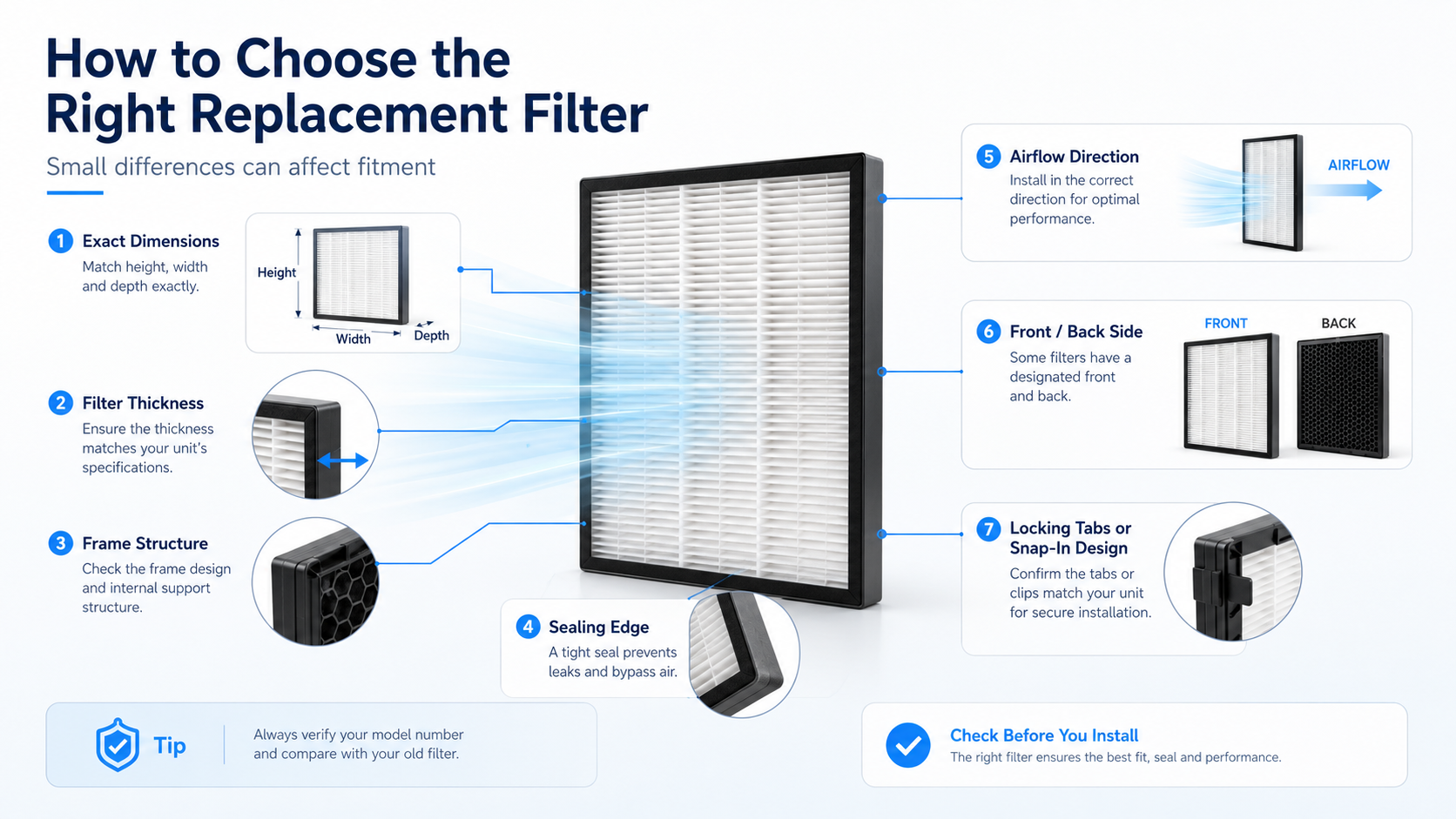
Many replacement filters look similar in photos, but small differences can affect fitment. A filter that is too thick, too loose, too short or shaped differently may not install correctly.
Before choosing a replacement filter, check:
Appliance model
Original filter shape
Filter length, width and thickness
Frame structure
Filter media type
Front and back side
Airflow direction
Locking tabs or snap-in design
Sealing edge
Original part number if available
For online buyers, clear product photos are very important. A good product page should show the front view, back view, side thickness, material texture and installation structure.For wholesale buyers, original samples or drawings are the safest way to reduce wrong-fit complaints.
Filter problems often come from small misunderstandings.
Common mistakes include:
Washing a filter that is not washable
Reinstalling a filter before it is dry
Buying only by appearance
Ignoring filter thickness
Confusing filter function with odor-control function
Waiting until odor becomes strong before checking the part
Using a damaged filter for too long
Forgetting to clean the tank, brush or dust cup around the filter
Assuming all filters in the same appliance category are interchangeable
A filter is only one part of the machine system. If the surrounding tank, brush, duct, dust cup or seal is dirty, a new filter may not solve every problem by itself.
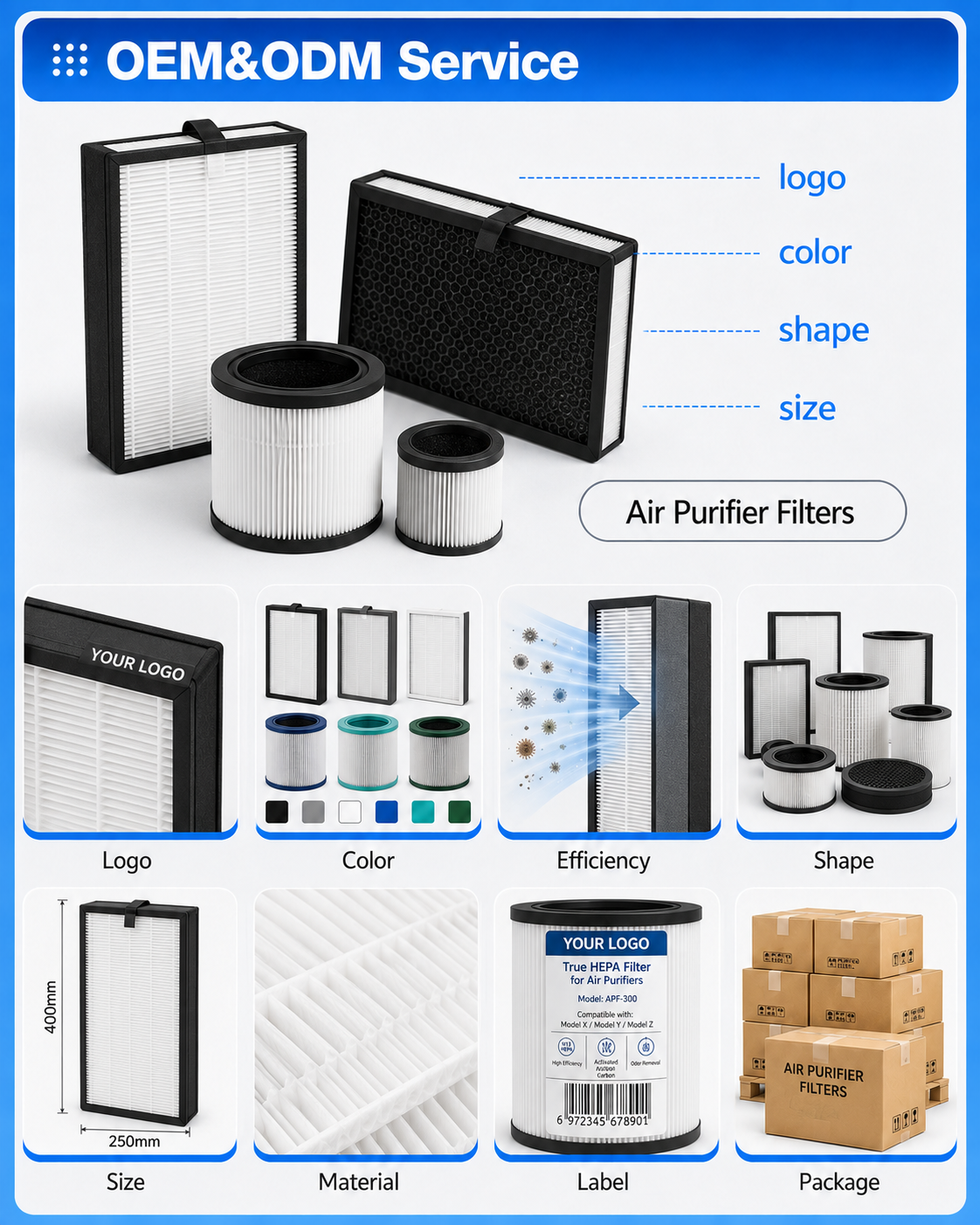
For distributors, e-commerce sellers and private label buyers, replacement filters should be checked carefully before bulk orders. Size, material, frame structure, fitment information and packaging all affect the final customer experience.
Before production, buyers usually need to confirm the original sample or drawing, exact dimensions, filter media, washable or non-washable design, label requirements, barcode information and packaging style. Clear product data helps reduce wrong-fit complaints and makes replacement parts easier for customers to identify.
Q1: Why does my filter smell bad?
A1: A filter may smell because it has collected dust, moisture, dirty water residue, pet hair, organic debris, mineral buildup or odor molecules over time.
Q2: Does a bad smell always mean the filter is broken?
A2: Not always. Sometimes the filter only needs cleaning and drying. If the smell remains after proper maintenance, replacement may be needed.
Q3: Why does airflow become weaker after using a filter for a long time?
A3: Dust, hair, mineral scale or residue can clog the filter structure and restrict airflow, suction, mist output or cleaning performance.
Q4: Can all filters be washed?
A4: No. Some foam or washable filters can be rinsed, but many HEPA, carbon, paper-based or mineral media filters should not be washed unless clearly designed for cleaning.
Q5: Why does my appliance still smell after replacing the filter?
A5: Odor may also come from the tank, roller brush, dust cup, internal duct, old water or surrounding parts. The filter is important, but it is not always the only odor source.
Q6: How do I know if I should clean or replace the filter?
A6: If the filter is washable, lightly dirty and still in good shape, cleaning may help. If it is damaged, clogged, smelly, deformed or no longer effective, replacement is usually better.
Q7: What is the difference between a filter and a deodorization module?
A7: A filter mainly captures particles or residue. A deodorization module supports odor control. They may work together, but they do different jobs.
Q8: What should wholesalers confirm before ordering replacement filters?
A8: Wholesalers should confirm size, shape, material, media type, frame structure, fitment information, packaging, label design and sample approval before bulk production.
Filters are small parts, but they can strongly affect how an appliance feels in daily use. Odor, weak airflow, poor suction, reduced mist output or visible residue may all be signs that a filter or maintenance part needs attention.
The best approach is simple: understand what the filter does, keep it clean and dry when possible, and replace it when cleaning no longer restores normal performance. For buyers, correct size, material and fitment information are just as important as the filter name.
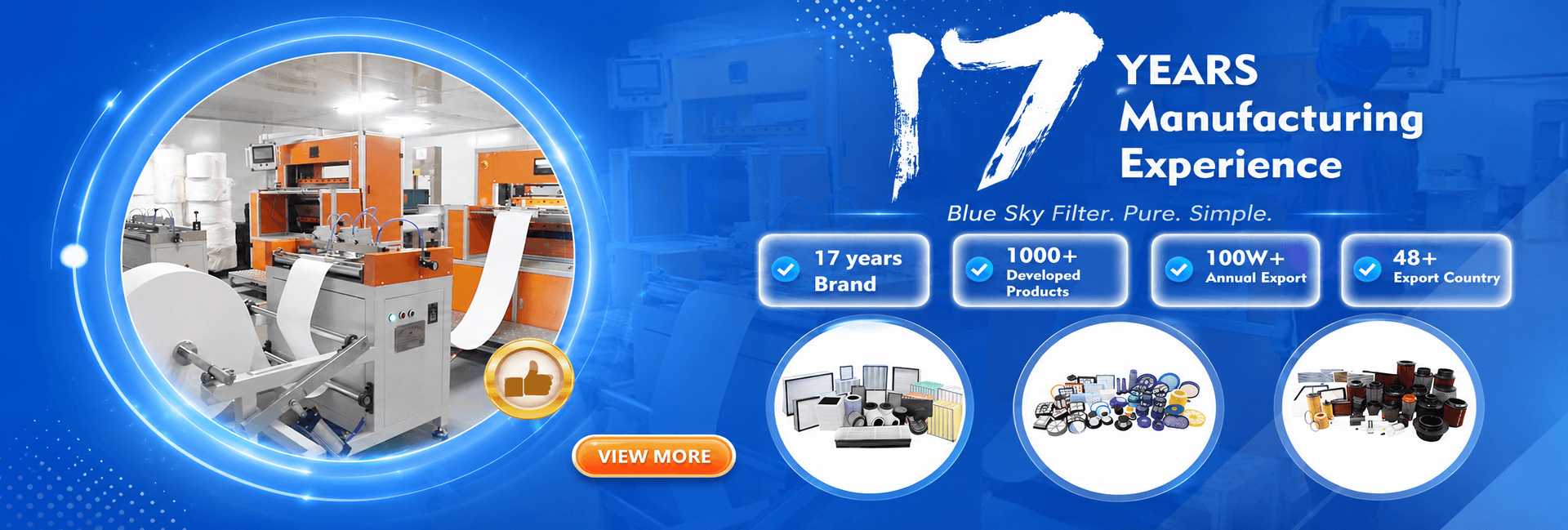
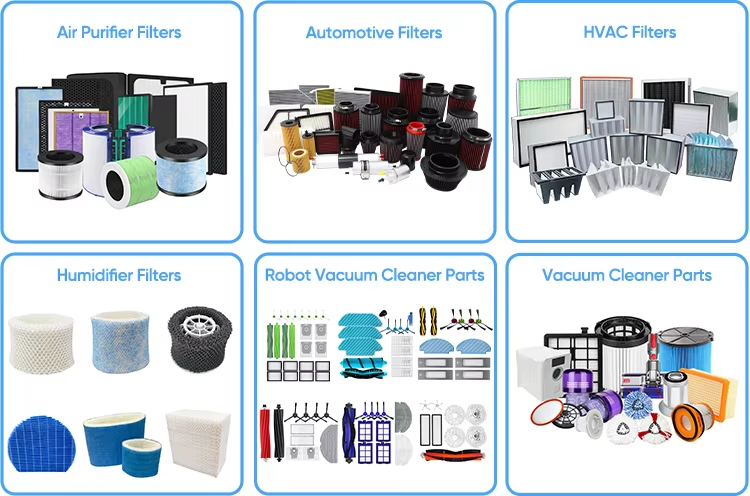
Blue Sky Filter supplies replacement filters and maintenance parts for different home appliance applications, including air purifier filters, vacuum cleaner filters, floor cleaner accessories, humidifier filters, robot vacuum parts and odor-control components. We support sample development, size customization, filter media selection, label design and OEM/ODM packaging for buyers who need stable replacement filter solutions.
If you want to see our updates in real time on social media, you can follow the following accounts.
LinkedIn: linkedin.com/company/blueskyfilter
Twitter: twitter.com/blueskyfilter
Facebook: www.facebook.com/blueskyfilter.manufacturer/
Youtube: www.youtube.com/@blueskyfilter
Instagram: https://www.instagram.com/nanjingblueskyfilters/


