Home » News » Application » Replacement Filter Fitment Guide: Size, Shape, Model And Installation Check
Hot Keywords:
- All
- Product Name
- Product Keyword
- Product Model
- Product Summary
- Product Description
- Multi Field Search

Views: 50 Author: Site Editor Publish Time: 2026-07-10 Origin: Site


Many replacement filters look almost the same at first glance. The color may be similar. The frame may look close. The product photo may seem right. But when the filter arrives, it may be too thick, too loose, too short, or simply unable to lock into the machine.
This is one of the most common problems with replacement filters and appliance maintenance parts. It can happen with air purifier filters, vacuum cleaner filters, humidifier filters, floor cleaner accessories, robot vacuum parts, pool filter cartridges and many other replacement products.
A model number is helpful, but it is not always enough. Size, shape, thickness, frame structure, sealing edge, locking tabs and installation direction all matter.This guide explains how to check replacement filter fitment before buying, how to compare the new filter with the original one, why product photos can be misleading, and what wholesale buyers should confirm before placing bulk orders.
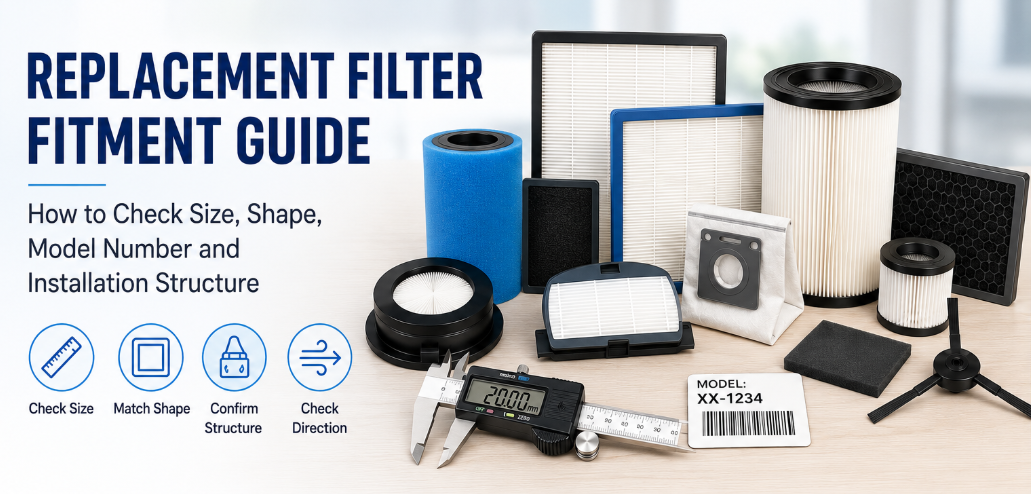
A replacement filter is not just a piece of material placed inside a machine. It is part of the machine’s airflow, water flow, dust collection or filtration system. If the filter does not fit correctly, the machine may still run, but the result may not be stable.
Poor fitment may cause:
Air leaking around the filter
Weak airflow or suction
Wrong installation direction
Filter movement during operation
Poor sealing around the frame
Difficulty closing the filter cover
Noise from loose parts
Customer complaints or returns
For everyday users, a wrong filter means wasted time and frustration. For distributors and e-commerce sellers, wrong fitment can become a larger after-sales problem. This is why checking the filter carefully before purchase is more important than simply matching a product title.
Many buyers start with a model number. That is useful, but it should not be the only confirmation.
A model number may not be enough because:
One appliance series may have several versions
Different markets may use slightly different parts
The same machine name may have updated filter designs
Similar reference numbers may refer to different products
Aftermarket listings may use broad compatibility descriptions
Product titles may contain several models for search purposes
For example, two filters may both be described as suitable for a similar appliance series, but one may have a thicker frame or a different locking edge. In photos, the difference may be hard to notice. In real installation, the difference matters.
The safest method is to use the model number as the first clue, then confirm the physical structure.
Before choosing a replacement, the original filter is the best reference.
If possible, remove the original filter and check:
Overall shape
Length and width
Height or thickness
Frame structure
Material type
Front and back side
Pull tab or handle
Sealing edge
Locking tabs
Airflow direction mark
Original part number or printed code
If the original filter is damaged or missing, the machine manual, product label, old order record or filter slot size can also help. However, an actual sample is usually more reliable than a description alone.
For wholesale buyers, sending an original sample or technical drawing before production can reduce many wrong-fit problems.
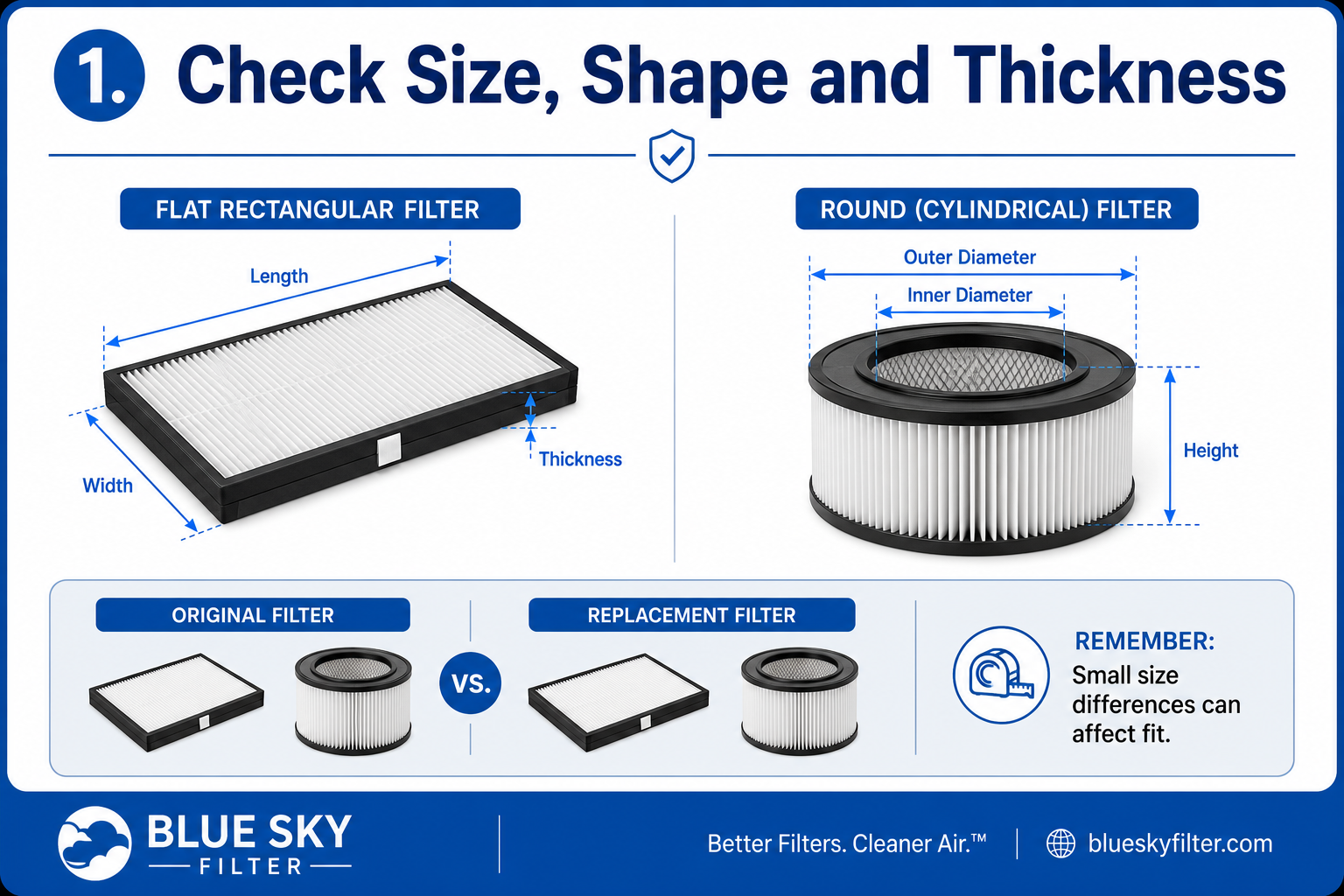
Size is the first thing to confirm. Many filters fail to fit not because the shape is completely wrong, but because one measurement is slightly different.
For flat or rectangular filters, check:
Length
Width
Thickness
Frame height
Corner shape
Side edge structure
For round or cylindrical filters, check:
Outer diameter
Inner diameter
Height
Top cap shape
Bottom cap shape
Center hole size
Handle or pull ring structure
For pool filter cartridges, round air purifier filters or cylindrical vacuum filters, diameter and height are especially important. A small difference in inner diameter or end cap structure may prevent proper installation.
When measuring, use the same unit throughout. If the product page uses inches and the original filter is measured in millimeters, convert carefully. A tiny measurement mistake can become a real fitment issue.
Two filters can have the same length and width but still fail to fit. The reason is often the frame.
Frame structure may include:
Plastic frame
Soft foam edge
Rubber sealing ring
Cardboard frame
Pull tab
Handle
Snap-in edge
Rounded corner
Reinforced side strip
Open or closed end cap
The frame helps the filter sit correctly inside the machine. It may also help seal air or water flow. If the frame shape is different, the filter may leave gaps or fail to lock in place.
This is especially important for air purifier filters, vacuum filters, floor cleaner filters and robot vacuum parts. In many appliances, the filter must slide into a narrow slot or snap into a fixed position.
Some replacement filters are not simply placed inside a machine. They need to lock, slide, twist, clip or snap into place.
Before buying, check whether the filter has:
Locking tabs
Side slots
Twist-lock structure
Snap-in clips
Pull ring
Installation handle
Top and bottom positioning parts
Asymmetric frame design
If the locking structure does not match, the filter may look correct but still cannot be installed.
This is a common issue with vacuum cleaner filters, robot vacuum accessories, floor cleaner modules and some air purifier filters. Buyers should compare not only the front view, but also the side and back view.
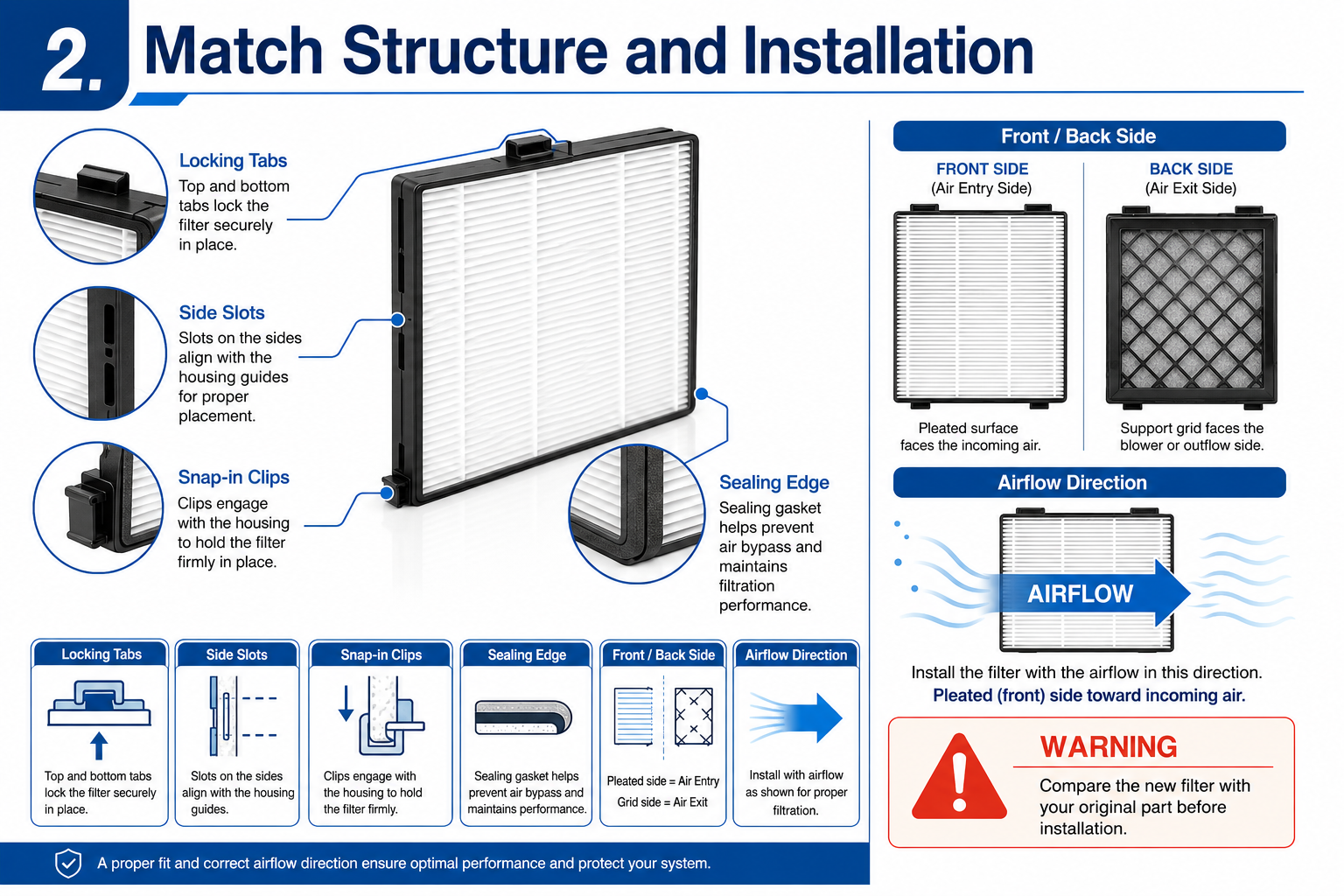
Some filters have a front side and back side. They are designed for air or water to pass through in a specific direction.
Airflow direction may be shown by:
Arrow mark
Printed label
Different front and back material
Mesh layer on one side
Carbon layer position
Pleated media direction
Sealing edge design
Installing a filter backward may reduce performance or cause poor sealing. In some cases, the machine may still operate, but the filter may not work as intended.
For product pages, airflow direction should be shown clearly when it matters. A simple arrow or front/back comparison image can help customers install the part correctly.
Fitment is not only about size. Material also matters.
Different filter materials have different roles:
| Filter Material or Structure | Common Function | Fitment Concern |
| HEPA filter media | Helps capture fine dust and particles | Media thickness and airflow resistance |
| Foam or sponge | Captures larger dust or supports pre-filtration | Shape recovery and moisture retention |
| Activated carbon layer | Supports odor reduction | Carbon layer position and thickness |
| Non-woven media | Used in many appliance filters | Density and frame bonding |
| Polyester pleated media | Common in water and cartridge filters | Pleat depth and end cap fit |
| Plastic frame | Supports filter shape | Locking structure and edge shape |
| Rubber sealing ring | Helps reduce bypass leakage | Diameter and softness |
A replacement filter may fit physically but still perform differently if the material structure is not suitable. For B2B buyers, material selection should be confirmed together with the application environment.
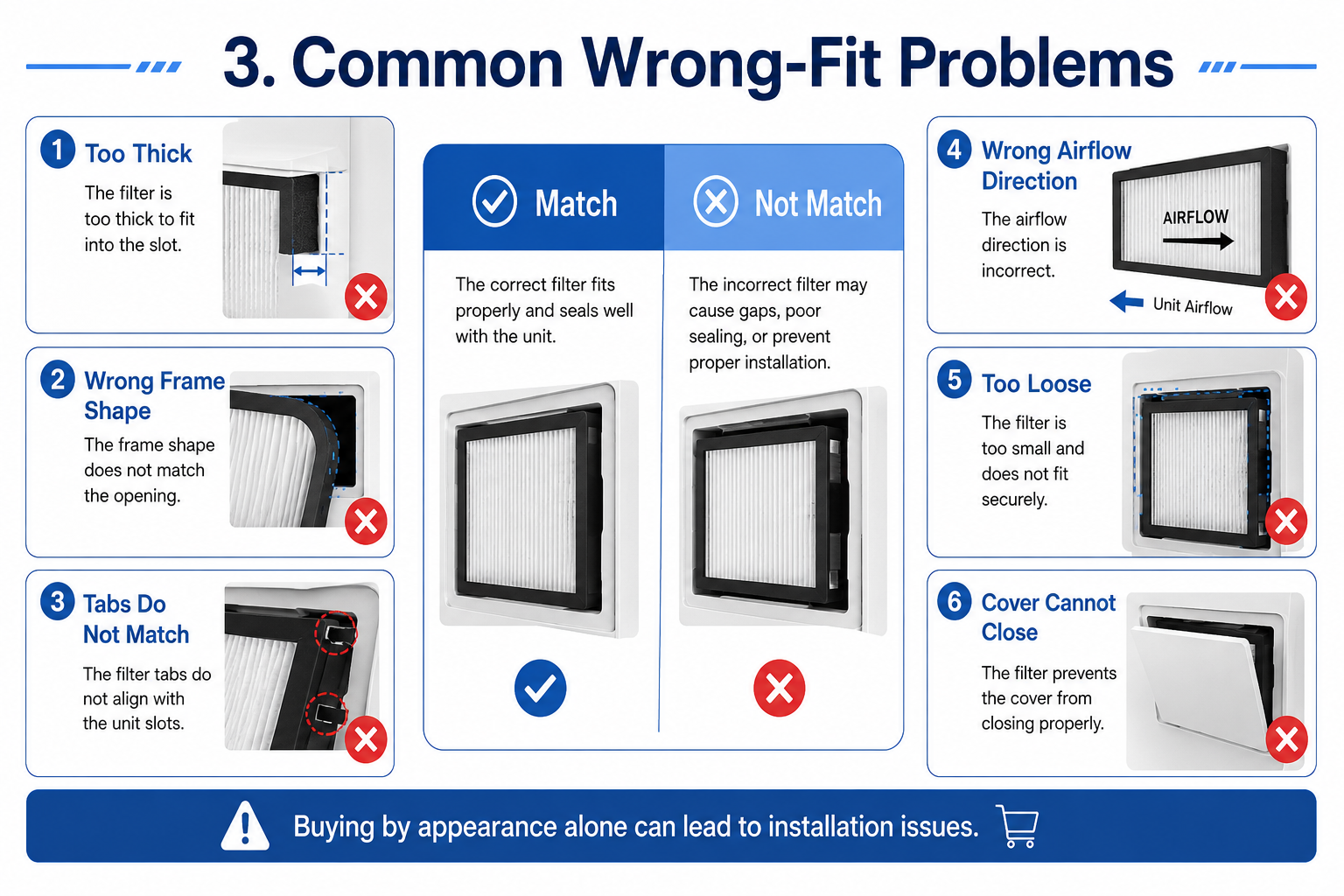
Wrong-fit issues are usually caused by small details.
Common problems include:
The filter looks similar but is too thick
The frame edge is slightly different
Locking tabs do not match the machine slot
The airflow direction is ignored
The model number is correct but the version is different
The filter fits loosely and leaves gaps
The cover cannot close after installation
The diameter is correct but the center hole is different
Product photos show only one side
The buyer checks size but forgets thickness
These mistakes are easy to avoid if the product page shows enough information. Clear images, accurate size drawings and fitment notes are not decoration. They reduce confusion.
For online sellers, wrong-fit complaints are often caused by missing details. A buyer may not know what to compare unless the product page makes it clear.
A strong replacement filter page should show:
Front view
Back view
Side view
Thickness measurement
Full size drawing
Frame and sealing edge close-up
Locking tab or handle detail
Airflow direction
Original reference number if available
Fitment note and comparison reminder
It is also helpful to add simple wording such as:
“Please compare the size, shape and installation structure with your original filter before ordering.”
This sentence may look small, but it can prevent many wrong purchases.
For distributors, appliance parts sellers, e-commerce buyers and private label brands, fitment details become even more important. One wrong detail may affect many orders.
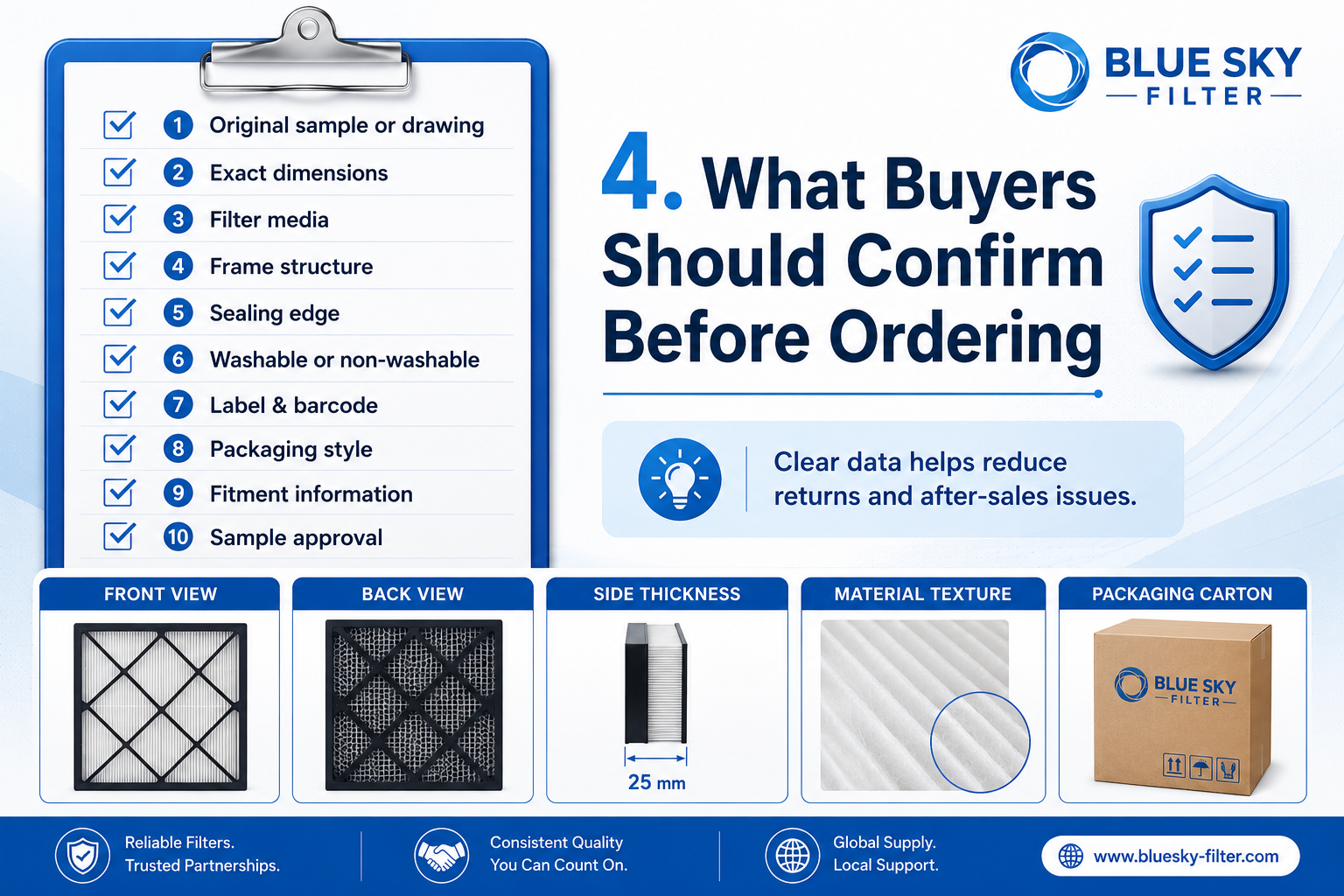
Clear sample confirmation helps both sides. It allows the supplier to check structure, material and packaging before bulk production, and it helps the buyer reduce after-sales risk.
Q1: Why does a replacement filter look the same but not fit?
A1: Small differences in thickness, frame shape, locking tabs, sealing edge or installation direction can make a filter unsuitable even if it looks similar in photos.
Q2: Is the model number enough to confirm fitment?
A2: The model number is helpful, but it should be checked together with the original filter size, shape, frame structure and installation position.
Q3: How should I measure a replacement filter?
A3: For flat filters, measure length, width and thickness. For cylindrical filters, measure height, outer diameter, inner diameter and end cap structure.
Q4: Why is filter thickness important?
A4: A filter that is too thick may prevent the cover from closing. A filter that is too thin may fit loosely and allow air or water to bypass the filter.
Q5: What does airflow direction mean?
A5: Airflow direction shows which way air should pass through the filter. Some filters have a specific front and back side, so direction should be checked before installation.
Q6: Should I compare the new filter with the original one?
A6: Yes. Comparing the replacement filter with the original filter is one of the safest ways to confirm size, shape, frame and installation structure.
Q7: Why do wholesale buyers need samples or drawings?
A7: Samples and drawings help confirm dimensions, material, frame structure, locking design and packaging before mass production, reducing wrong-fit and quality risks.
Q8: What information should be shown on a product page?
A8: A product page should show front, back and side views, size drawing, thickness, material, fitment reference, installation structure and comparison notes.
Choosing a replacement filter is not only about finding a similar product photo or matching a model number. Size, shape, thickness, frame structure, sealing edge, airflow direction and installation details all affect whether the filter can fit correctly.
For everyday users, comparing the replacement filter with the original part is the simplest way to avoid buying the wrong product. For sellers and wholesale buyers, clear size data, sample confirmation and accurate product images are the keys to reducing returns and customer complaints.
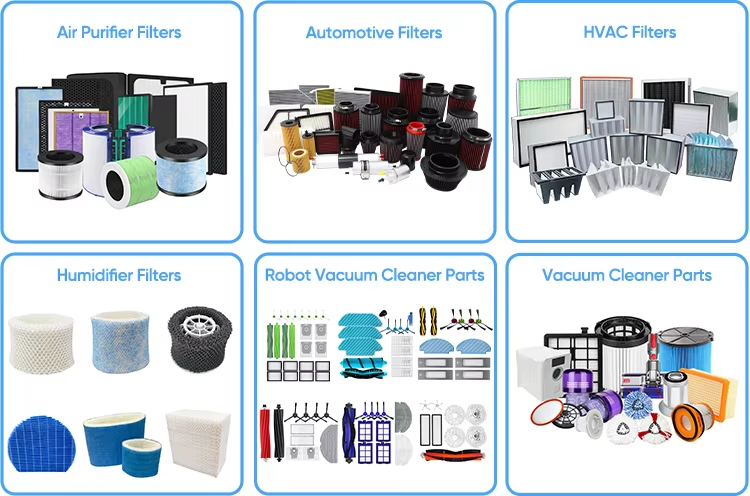
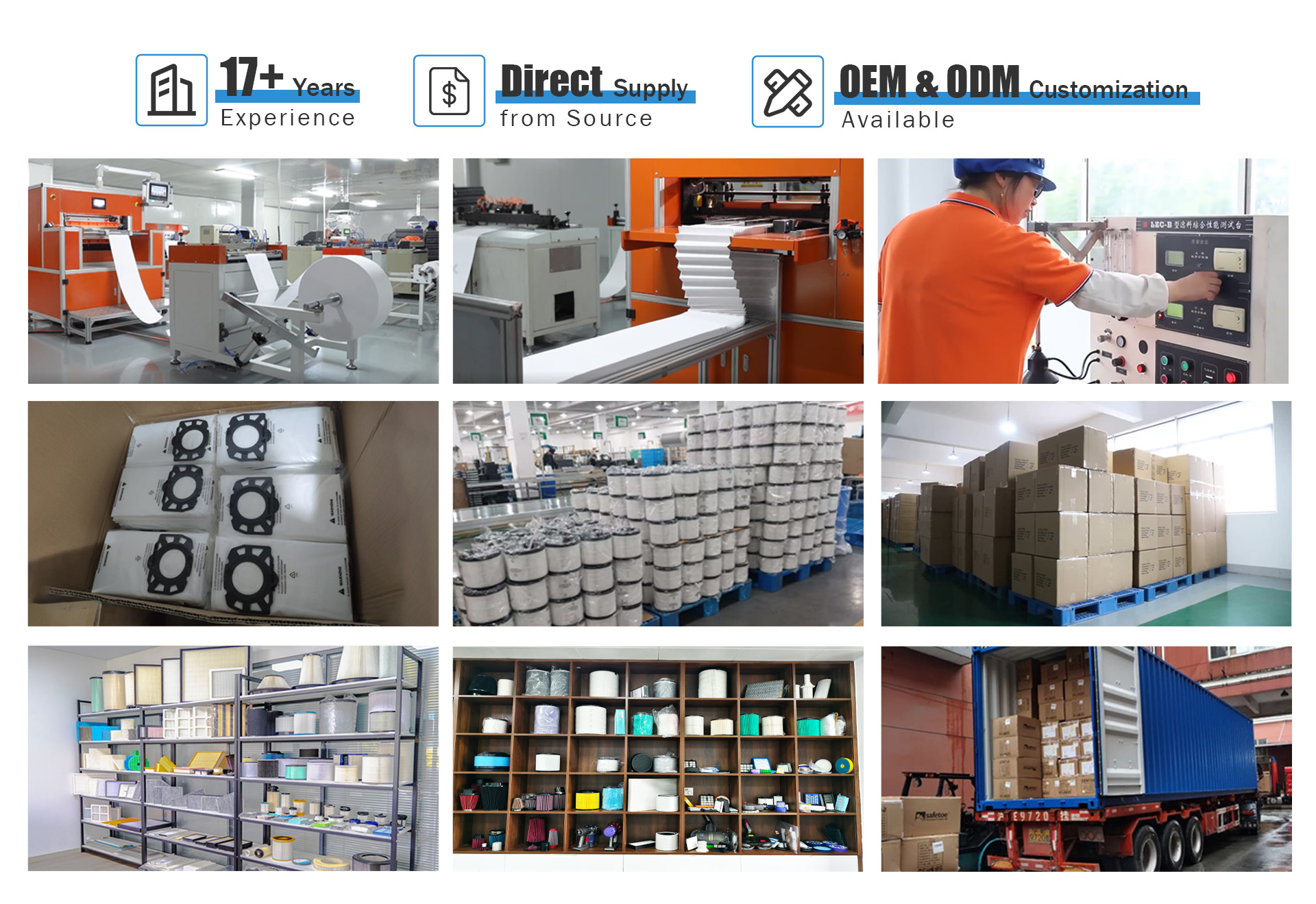
Blue Sky Filter supports replacement filter development for air purifiers, vacuum cleaners, humidifiers, floor cleaners, robot vacuum accessories, pool filter cartridges and other filtration applications. Buyers can provide original samples, drawings, dimensions or photos for fitment confirmation, material selection, packaging customization and OEM/ODM production support.


If you want to see our updates in real time on social media, you can follow the following accounts.
LinkedIn: linkedin.com/company/blueskyfilter
Twitter: twitter.com/blueskyfilter
Facebook: www.facebook.com/blueskyfilter.manufacturer/
Youtube: www.youtube.com/@blueskyfilter
Instagram: https://www.instagram.com/nanjingblueskyfilters/


