Hot Keywords:
- All
- Product Name
- Product Keyword
- Product Model
- Product Summary
- Product Description
- Multi Field Search

Views: 50 Author: Melody Publish Time: 2026-09-21 Origin: Site


Does your car smell stale when the A/C starts? Does the airflow feel weaker than before, or does dust seem to return quickly after cleaning the interior?
The cabin air filter may be worth checking.
A cabin air filter cleans air passing through the vehicle's heating, ventilation and air-conditioning system before that air reaches the passenger compartment.
Its main job is simple:
Keep dust, pollen, soot and other airborne particles out of the cabin while allowing enough air to flow through the HVAC system.
Depending on its construction, a cabin filter may also contain activated carbon to help reduce certain unpleasant odors and gaseous contaminants. Bosch describes standard cabin filters as particle filters for allergens and fine dust, while activated-carbon versions add a carbon layer for gases and odors.
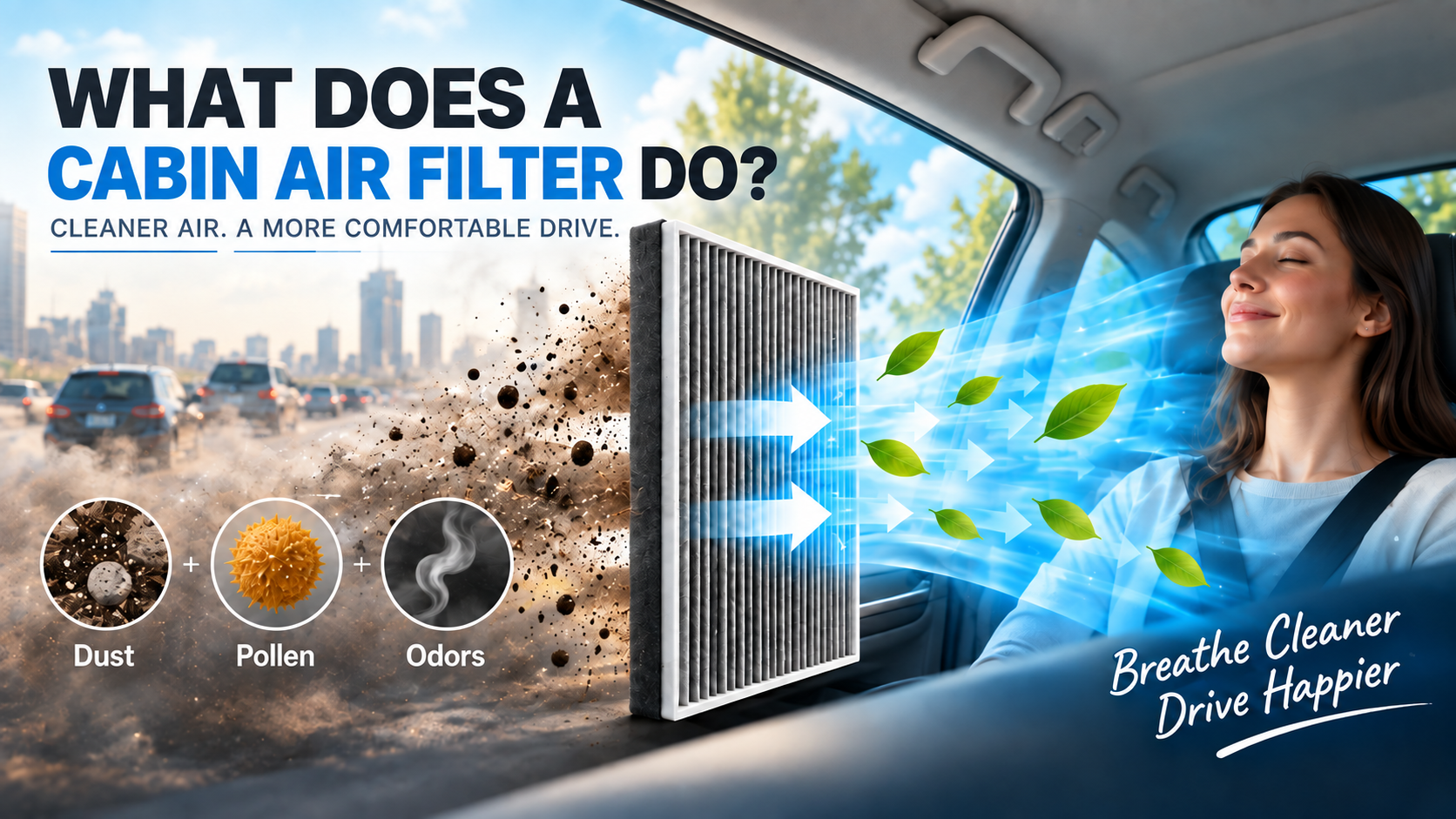
A typical cabin filter helps capture contaminants such as:
Dust
Pollen
Soot
Road particles
Fine airborne debris
Some mold spores and similar particles
Ford also describes cabin filters as helping restrict dust, pollen, soot and other particulates from the HVAC air stream.
The exact performance depends on the filter media and construction.
That is why two filters that look almost identical can perform differently.
This is probably the most useful distinction for everyday drivers.
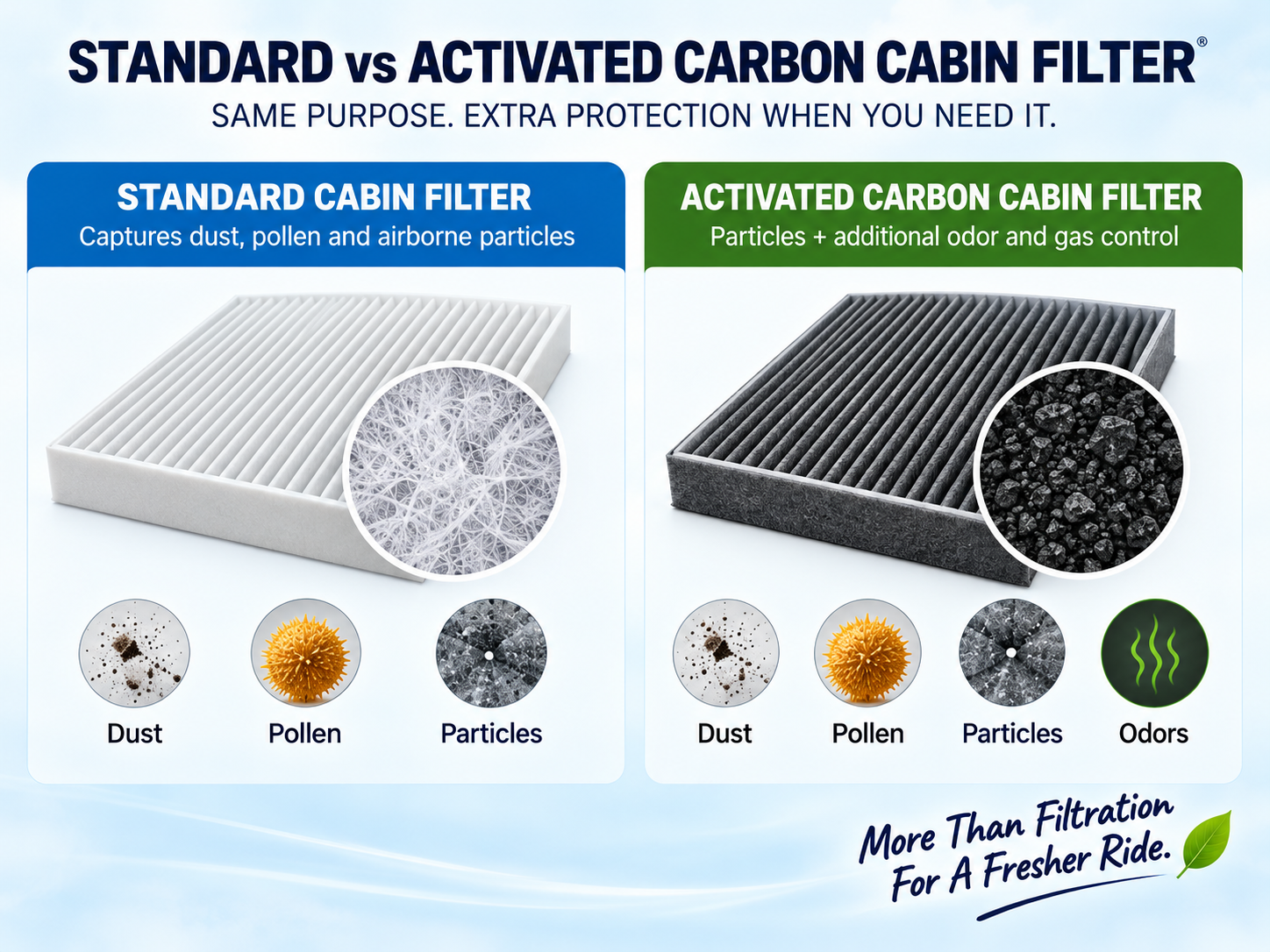
| Filter Type | Best For |
| Standard Cabin Filter | Dust, pollen and airborne particles |
| Activated Carbon Cabin Filter | Particles plus additional odor and gas control |
| Multi-Layer Cabin Filter | Combines several media for broader filtration |
Activated carbon contains a highly porous structure that adsorbs certain gas molecules as air passes through it. It is commonly added when odor control is an important part of the filter design.
So if you regularly drive in:
Heavy city traffic
Areas with exhaust fumes
Tunnels
Polluted urban environments
Places where outside odors frequently enter the cabin
an activated carbon cabin filter may be worth considering.
You do not need to wait until the filter looks completely black.
Watch for a few practical signs.
If the fan sounds normal but less air comes through the vents, a loaded cabin filter may be adding resistance to the HVAC airflow.
More dust appearing around the dashboard and interior vents can be a reason to inspect the filter.
A musty or stale smell when the HVAC system starts may indicate that the filter or other parts of the air-conditioning system need attention.
Leaves, insects, heavy dust or dark contamination on the filter media are clear signs that inspection or replacement should not be ignored.
These two filters are easy to confuse, but they do completely different jobs.
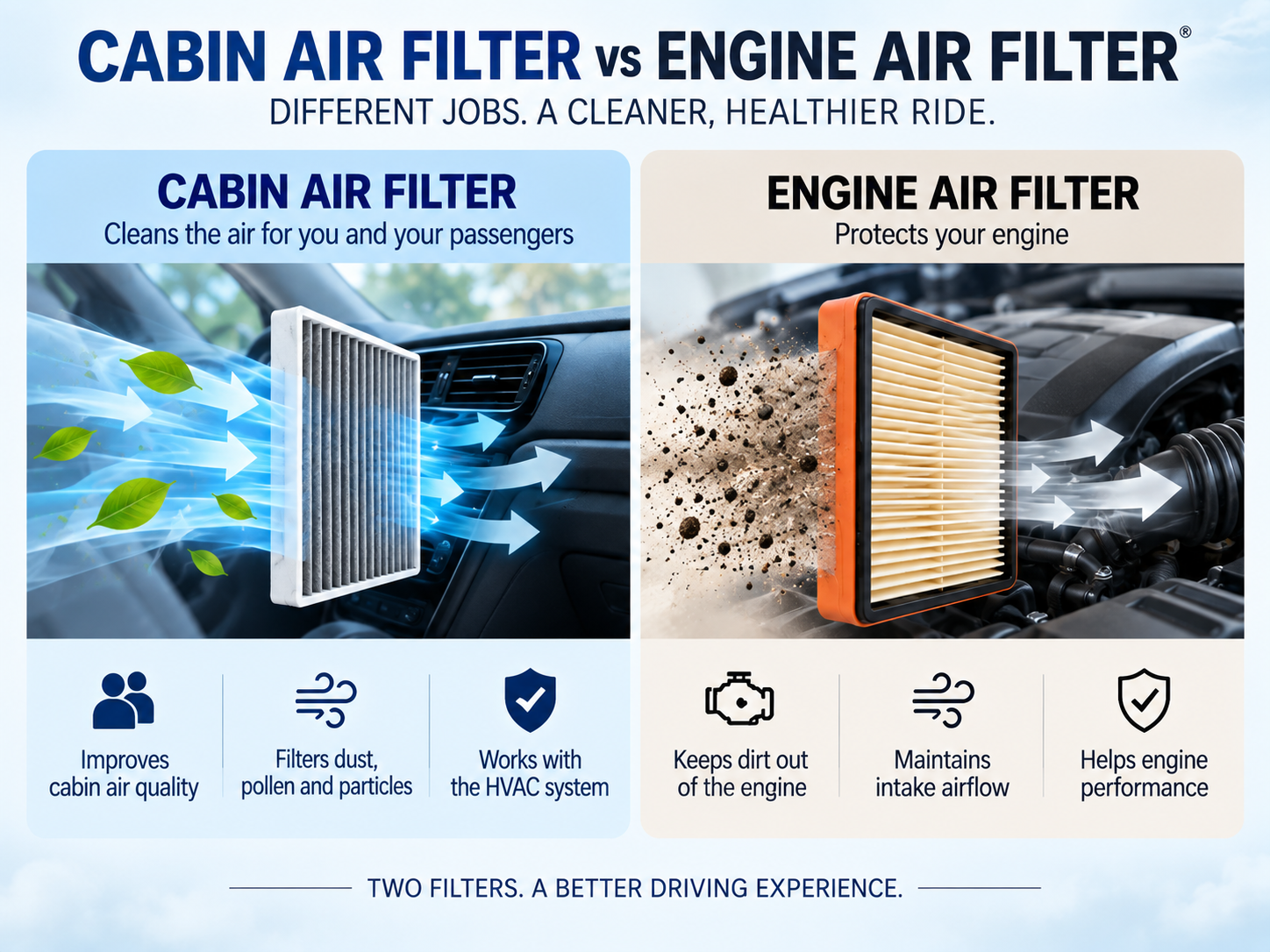
| Cabin Air Filter | Engine Air Filter |
| Cleans air for the passenger cabin | Cleans air for the engine |
| Works with the HVAC system | Works with the engine intake |
| Helps control dust and pollen inside the vehicle | Helps protect the engine from airborne debris |
| Focuses on cabin air and HVAC airflow | Focuses on engine intake protection |
Replacing an engine filter does not replace the function of the cabin filter.
Your car can have a perfectly clean engine air filter while the cabin filter is already packed with dust.
This is where filter selection becomes more practical.
A conventional pleated cabin filter is suitable when the main concern is dust, pollen and road particles.
For example, Blue Sky Filter currently supplies standard cabin filter structures for different automotive applications in its cabin filtration range.
If the vehicle is frequently used in traffic-heavy environments, an activated carbon structure may provide an additional advantage.
One example from the current Blue Sky Filter range is an Activated Carbon Cabin Air Filter compatible with selected Toyotas, Lexuss and Daihatsus applications using the CF10285 reference.
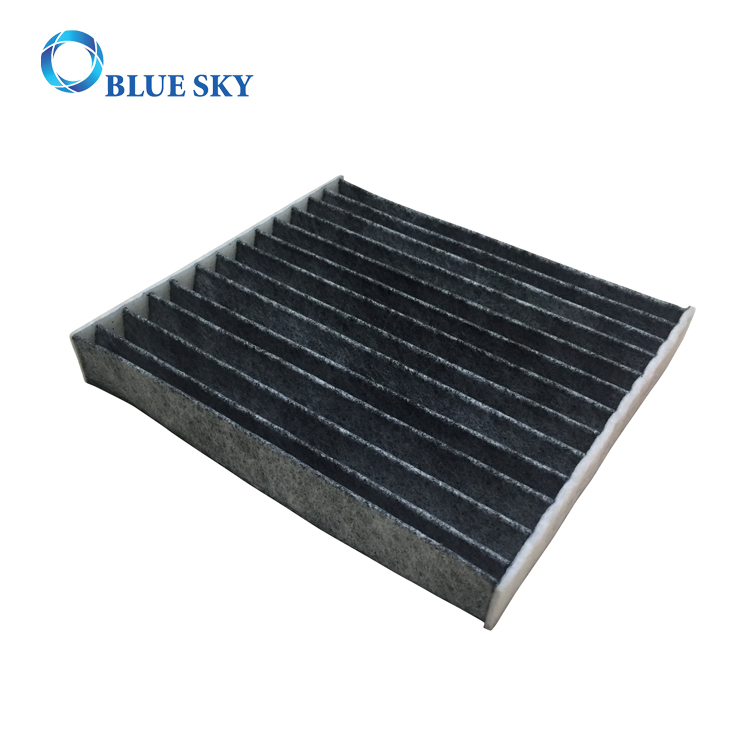
The product uses activated-carbon media, making it a useful example of how particle filtration and odor-control media can be combined in one cabin filter.
Electric vehicles still rely on cabin filtration even though their powertrain is very different from a conventional combustion-engine vehicle.
For selected Teslas Model 3 and Model Y applications, Blue Sky Filter also offers a replacement cabin-filter structure using paper, activated carbon and foam media.

This is a good example of how cabin filtration continues to matter regardless of whether the vehicle uses a gasoline engine or an electric drivetrain.
Compact SUVs and vehicles used around dusty roads may expose cabin filters to heavier particle loading.
Blue Sky Filter also currently offers an activated-carbon cabin filter compatible with selected Suzukis Jimny JB64/JB74 applications.

This type of application highlights why the driving environment matters just as much as the vehicle itself.
There is no single interval that applies to every vehicle.
Replacement timing depends on:
Vehicle manufacturer recommendations
Mileage
Dust exposure
Pollen levels
Urban pollution
Driving environment
Actual filter condition
For example, Ford lists 12 months or 15,000 miles for some cabin-filter applications while still directing owners to the specific vehicle guide.
So the better rule is:
Follow the vehicle maintenance schedule, but inspect the filter earlier if airflow becomes weak or the vehicle is regularly driven in dusty or polluted conditions.
Yes. Air must pass through the cabin filter before reaching the passenger compartment. A heavily loaded filter can increase airflow resistance and may contribute to weaker vent airflow.
Yes. Pollen is one of the common particles that cabin air filters are designed to capture.
Not automatically. A standard filter is suitable for particle filtration, while activated carbon adds the ability to adsorb certain odors and gases. The better option depends on the driving environment.
No. Activated carbon can help reduce certain odors, but smells may also come from the evaporator, moisture, upholstery or other sources.
No. The cabin filter cleans air entering the passenger compartment, while the engine air filter protects the engine intake.
A cabin air filter may be small, but it sits directly between the outside environment and the air you breathe inside the vehicle.
Its job is to help capture dust, pollen, soot and other airborne particles, while maintaining airflow through the HVAC system.
For everyday driving, a standard particle filter may be enough. For traffic-heavy or odor-prone environments, an activated carbon cabin filter can add another layer of filtration.
The key is not simply choosing the most complicated filter.
Choose the correct fit, the right filter media for your driving environment, and replace it when the vehicle and filter condition tell you it is time.
If you want to see our updates in real time on social media, you can follow the following accounts.
LinkedIn: linkedin.com/company/blueskyfilter
Twitter: twitter.com/blueskyfilter
Facebook: www.facebook.com/blueskyfilter.manufacturer/
Youtube: www.youtube.com/@blueskyfilter
Instagram: https://www.instagram.com/nanjingblueskyfilters/


