Introduction
Wet dry floor cleaners are convenient because they can wash, scrub and collect dirty water at the same time. For homes with pets, children, kitchens, entryways or hard floors, this type of machine can save a lot of daily cleaning time.
But after weeks or months of use, some users notice a common problem: the machine starts to smell. The odor may come from the dirty water tank, the roller brush area, the filter, the internal airflow path or moisture left inside the machine after cleaning.
This does not always mean the machine is broken. In many cases, odor is a maintenance issue. Dirty water, fine dust, hair, detergent residue and trapped moisture can all create an environment where unpleasant smells develop.
This guide explains why wet dry floor cleaners may smell, how filters and deodorization modules help, when replacement parts may be needed and how users can maintain the machine more effectively.
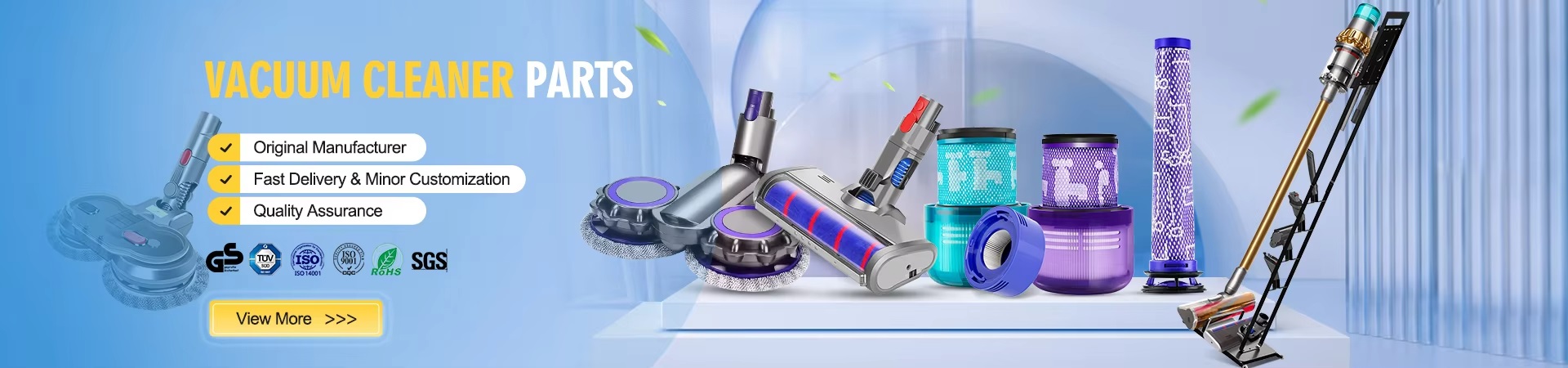
Why Do Wet Dry Floor Cleaners Develop Odor?
A wet dry floor cleaner handles both water and dirt. During cleaning, the machine collects dirty water, food residue, dust, pet hair, floor particles and cleaning solution. These materials are pulled into the dirty water tank or pass through the machine’s cleaning path.
If the tank is not emptied in time, or if the filter and brush area stay wet for too long, odor can develop.
Common odor sources include:
Dirty water left in the tank
Pet hair and food residue
Damp roller brush
Clogged or wet filter
Cleaning solution residue
Moisture inside the machine
Dust and debris trapped around the airflow path
Poor drying after use
The smell often becomes stronger when the machine is stored with moisture inside. A closed tank or damp filter area can quickly turn a small cleaning issue into a noticeable odor problem.
Dirty Water Tank Smell: The Most Common Source
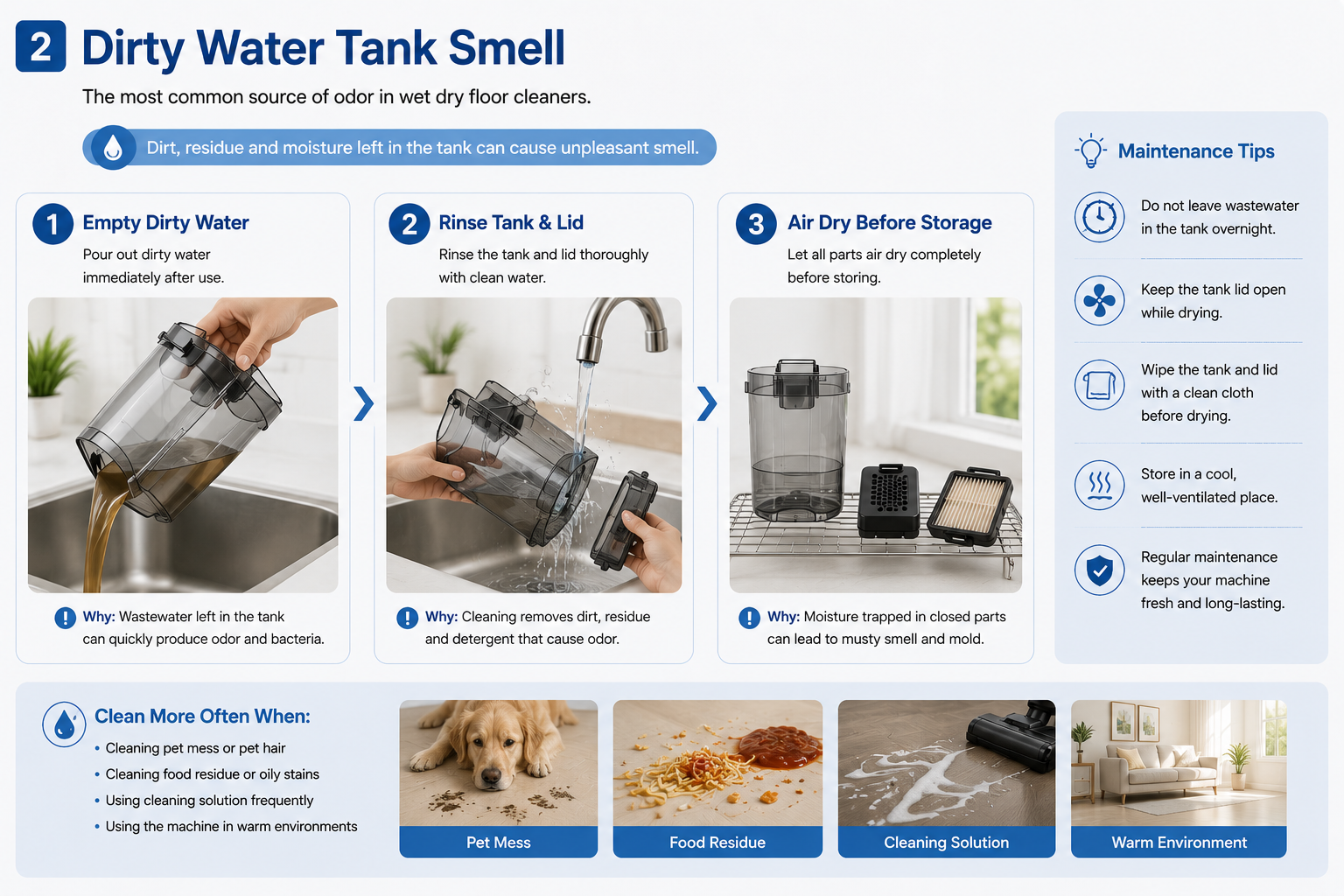
The dirty water tank is usually the first place to check when a floor cleaner smells bad. It collects water mixed with dust, stains, detergent and debris. If this mixture stays in the tank, bacteria and odor can build up.
A dirty water tank may smell when:
Wastewater is left overnight
Food residue is collected from the floor
Pet hair or pet mess is cleaned
The tank is rinsed but not dried
The tank lid or seal holds moisture
The machine is stored in a warm area
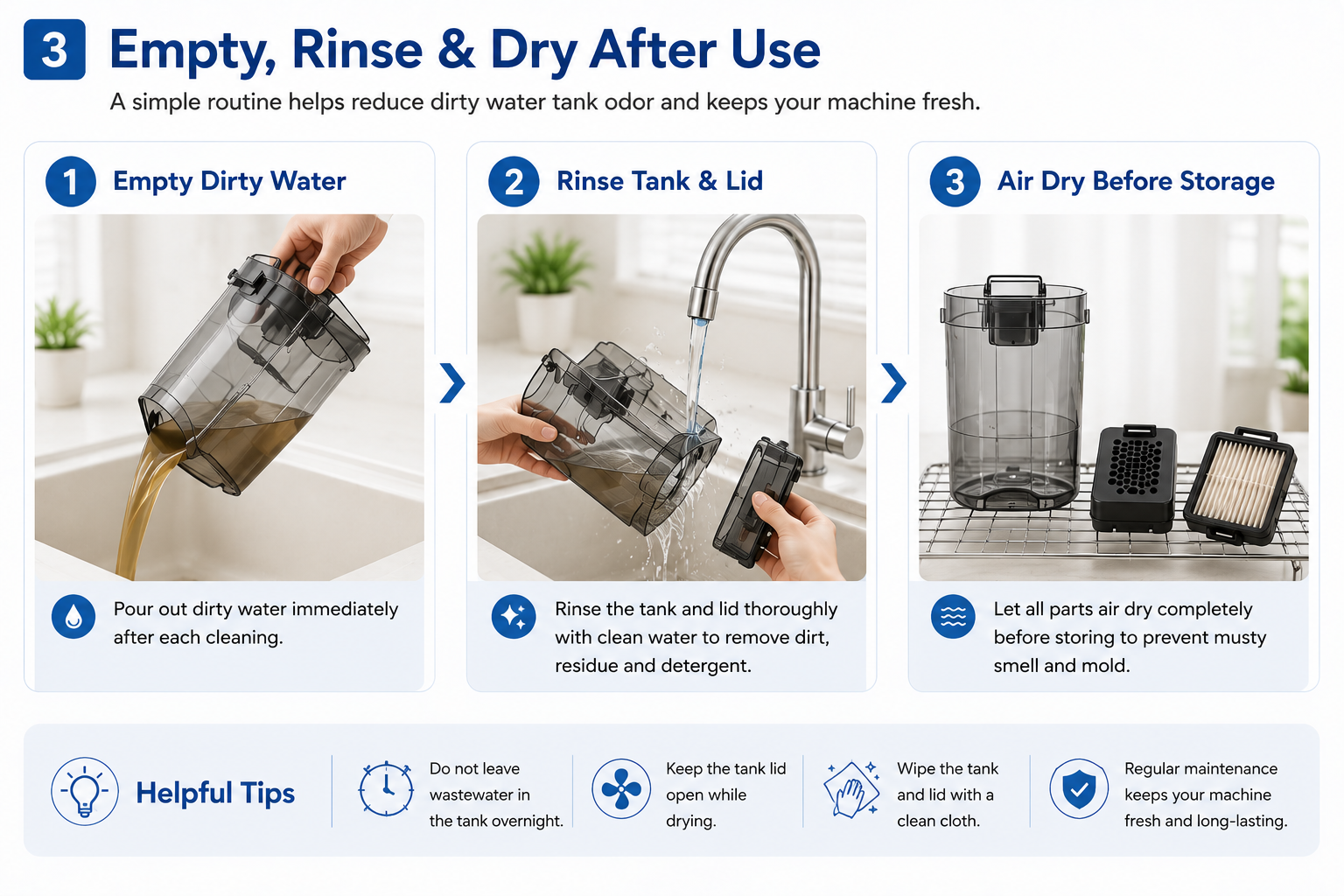
The best habit is simple: empty and rinse the dirty water tank after each use. It may feel like a small step, but it makes a big difference in daily odor control.
The Role of Filters in Floor Cleaner Maintenance
Many wet dry floor cleaners use filters to help separate particles from airflow or dirty water. These filters may catch dust, hair, lint and small debris before air moves through the machine.
A filter can help support:
Dust and debris capture
Airflow stability
Protection of internal parts
Cleaner machine operation
Reduction of residue buildup
However, a filter can also become a source of odor if it stays wet, clogged or dirty. A damp filter that is stored without drying may develop musty smell. A clogged filter may also restrict airflow, making the machine feel weaker during use.
This is why filter maintenance should be part of regular floor cleaner care.
What Is a Deodorization Module?
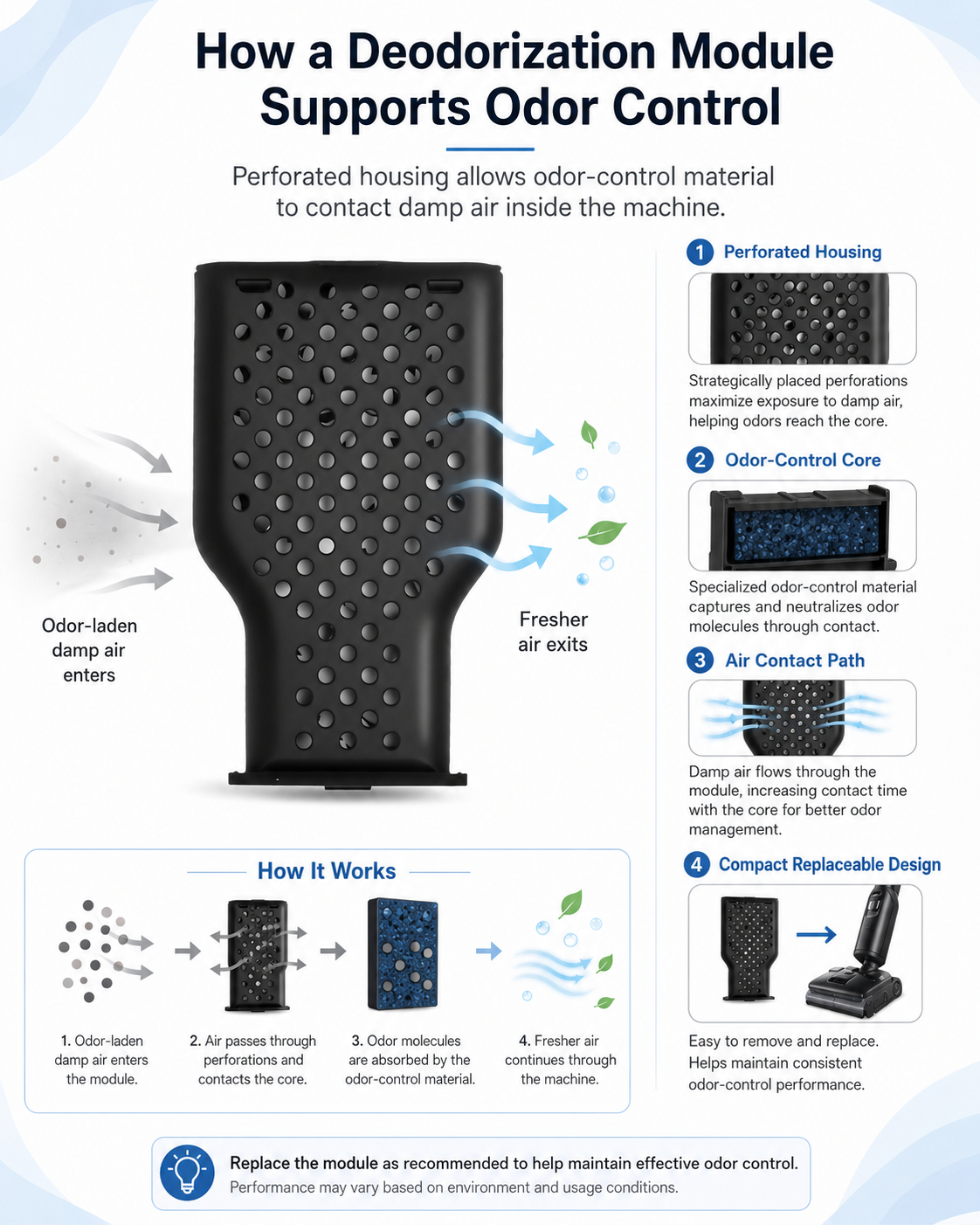
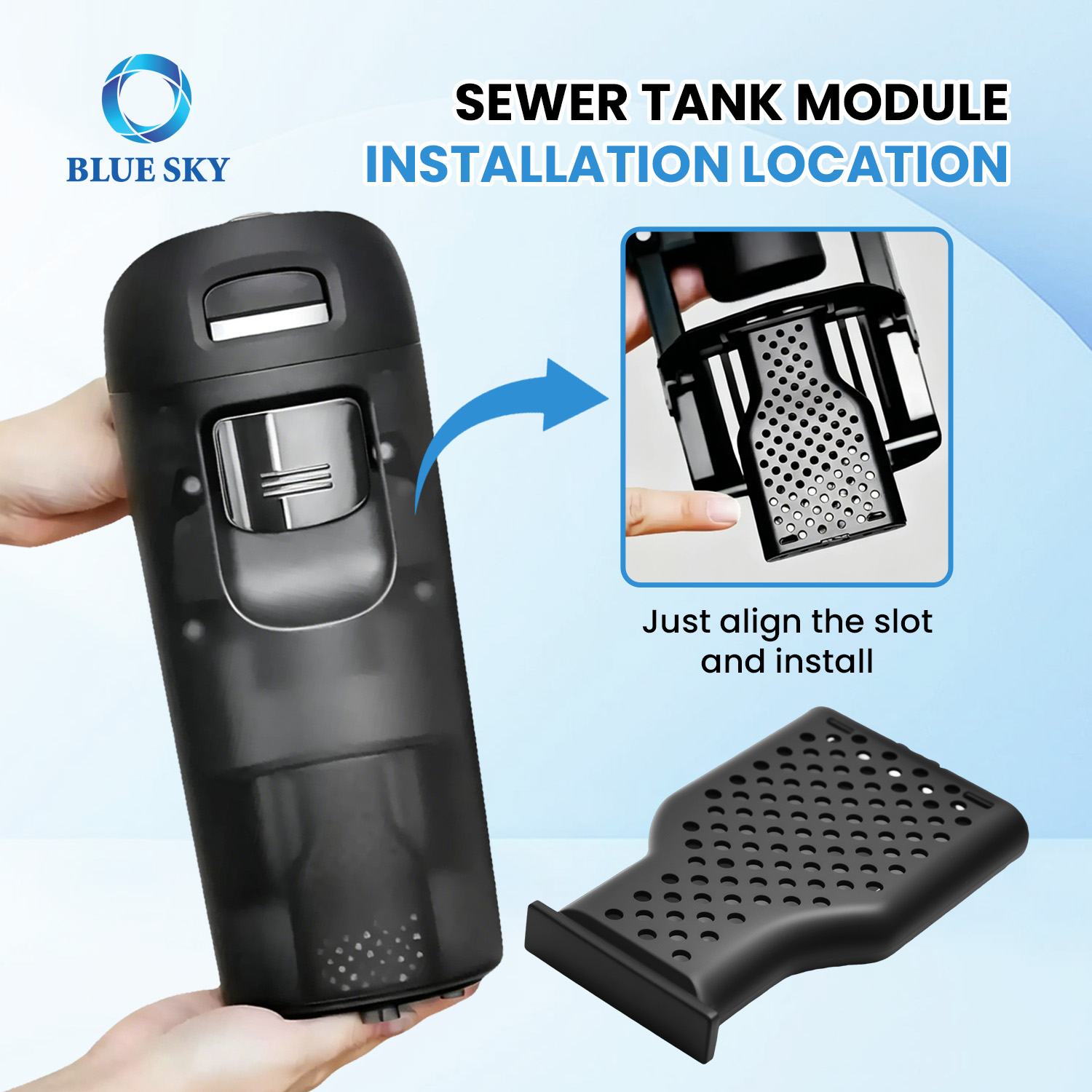
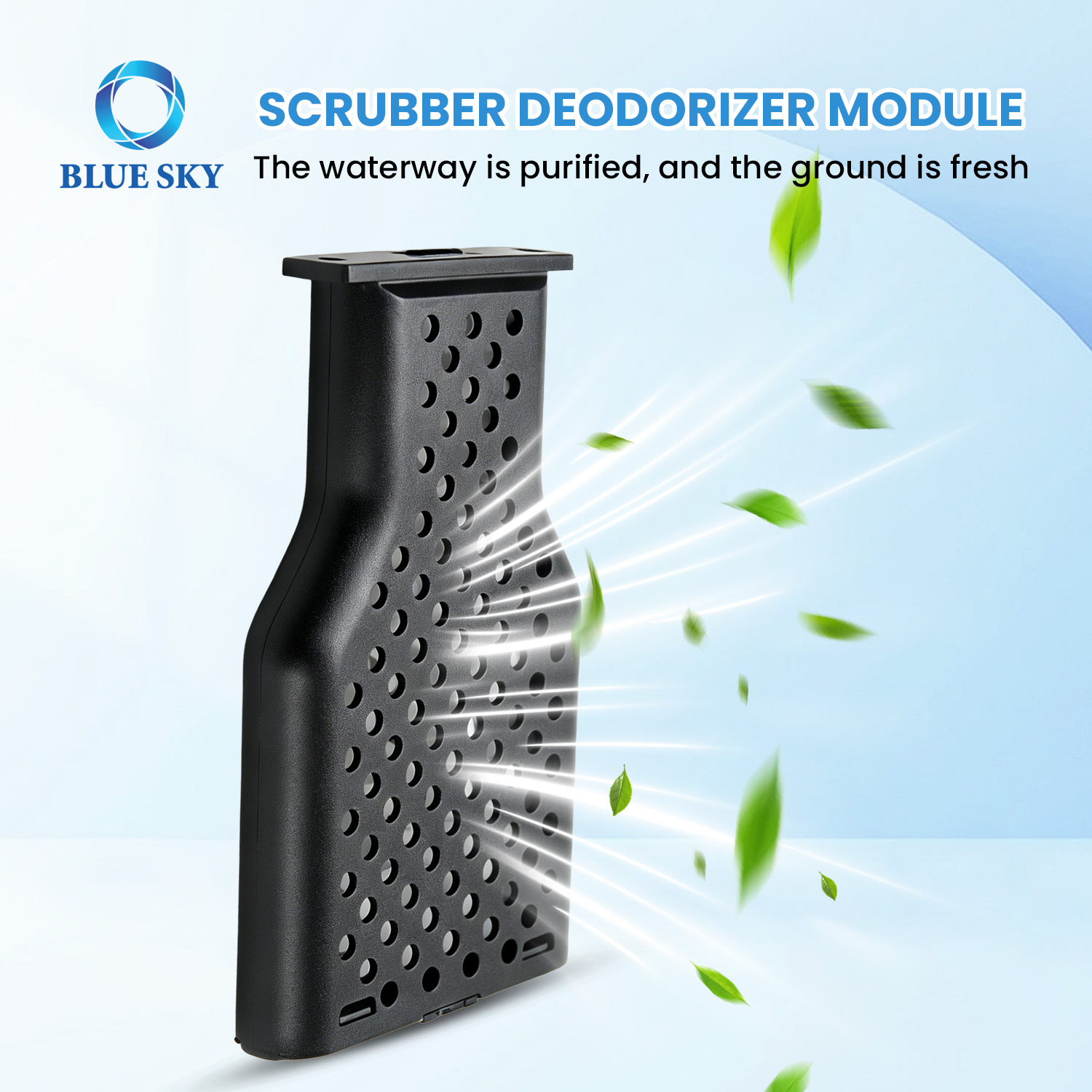
A deodorization module is a small accessory designed to support odor control inside a floor cleaner or similar cleaning machine. It may be placed near the dirty water area, airflow path or storage area depending on the machine design.
A deodorization module does not replace cleaning. It should be understood as a support part, not a magic solution. Its purpose is to help reduce unpleasant smells caused by damp residue, dirty water odor or closed storage conditions.
A floor cleaner deodorization module may help with:
Dirty water tank smell support
Damp storage odor control
Wet cleaning residue smell reduction
Routine floor cleaner maintenance
Better user experience after cleaning
For best results, it should be used together with regular tank cleaning, filter drying and brush maintenance.
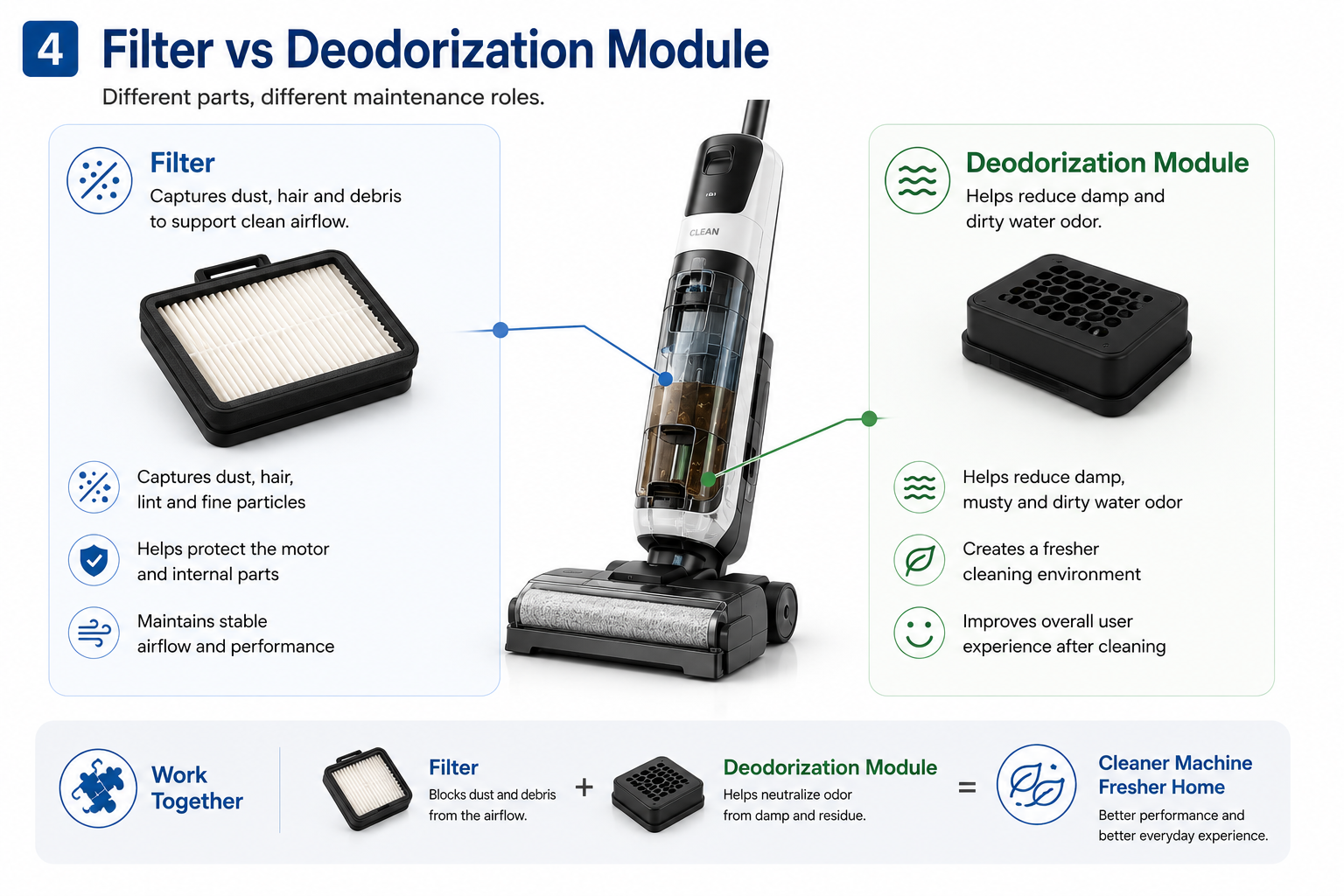
Filter vs Deodorization Module: What Is the Difference?
Filters and deodorization modules are often mentioned together, but they do different jobs.
| Part | Main Function | Common Purpose |
| Filter | Captures dust, hair and debris | Supports airflow and machine protection |
| Roller Brush | Scrubs and lifts dirt from the floor | Handles direct floor cleaning |
| Dirty Water Tank | Stores used water and debris | Collects wastewater after cleaning |
| Deodorization Module | Supports odor control | Helps reduce damp or dirty water smell |
| Cleaning Solution | Helps loosen stains | Supports floor washing performance |
A filter handles particles. A deodorization module handles odor support. A dirty water tank stores waste. Each part plays a different role, and each part needs proper maintenance.
Why Moisture Makes Odor Worse
Moisture is the hidden troublemaker inside wet cleaning machines. After use, water can remain in the tank, roller brush, filter, pipe or base area. If the machine is closed and stored immediately, the remaining moisture may cause stale or musty smell.
Odor is more likely to appear when:
The machine is stored without drying
The dirty water tank is closed while damp
The roller brush remains wet
The filter is reinstalled before drying
The machine is used with heavily soiled water
The storage area is warm or poorly ventilated
A good maintenance routine should include cleaning and drying. Drying is not decoration. It is part of odor control.
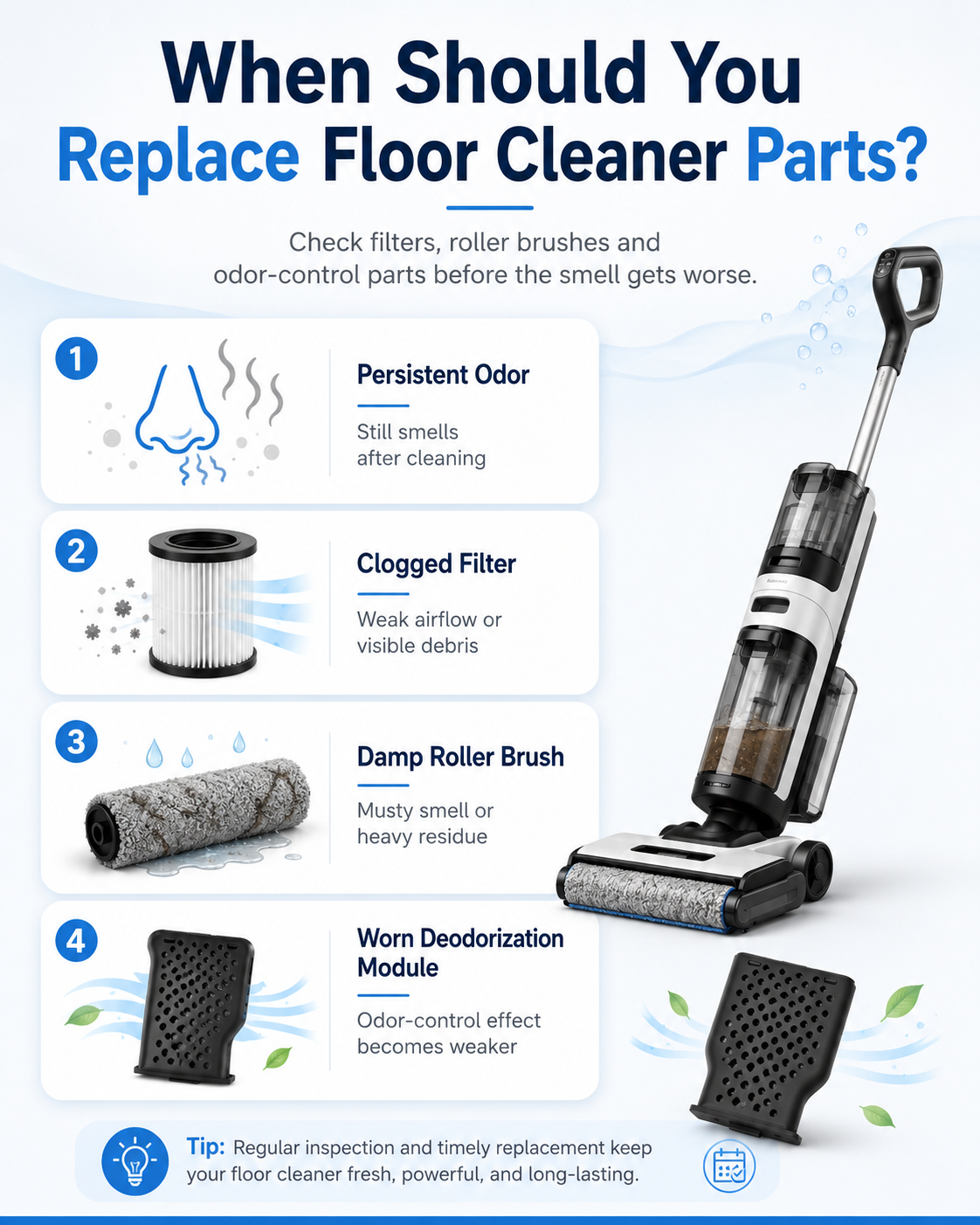
When Should Filters or Odor-Control Parts Be Replaced?
Cleaning can solve many odor problems, but not all. Some parts wear out over time or absorb too much residue.
Replacement may be needed when:
The filter still smells after cleaning
The filter becomes deformed or clogged
The deodorization module loses effect
The dirty water tank seal becomes dirty or damaged
The roller brush smells even after washing
Airflow becomes weaker
The machine smells immediately after use
Visible residue remains around the filter area
If a part looks clean but still smells, it may have absorbed odor internally. In this case, replacement is often more practical than repeated washing.
How to Maintain a Wet Dry Floor Cleaner After Use
A simple routine can prevent most odor problems.
After each use, users can:
Empty the dirty water tank
Rinse the tank and lid
Clean the filter area
Remove hair from the roller brush
Rinse the roller brush if needed
Let the filter dry completely
Keep the tank open until dry
Store the machine in a ventilated place
Replace worn filters or odor-control parts on time
If the machine has a self-cleaning function, it can help rinse the internal path. But self-cleaning does not always replace manual cleaning. The tank, filter and brush still need regular inspection.
Common Mistakes That Cause Floor Cleaner Smell
Many odor problems come from small habits.
Common mistakes include:
Leaving dirty water in the tank overnight
Installing a damp filter too soon
Forgetting to clean the tank lid
Storing the machine with a wet roller brush
Using too much cleaning solution
Not checking the filter for debris
Waiting until the odor becomes strong before cleaning
Assuming self-cleaning solves everything
The easiest way to reduce odor is not to wait. Empty, rinse and dry the key parts before the smell has time to grow.
How to Choose Replacement Parts for Floor Cleaners
Wet dry floor cleaner accessories may look similar, but fitment matters. A filter, roller brush, tank seal or deodorization module should match the original machine structure.
Before choosing replacement parts, check:
For online buyers, clear images are important. Product pages should show front view, side view, size, installation area and material details. For wholesale buyers, original samples or accurate drawings help reduce wrong-fit complaints.
FAQ
Q1: Why does my wet dry floor cleaner smell bad?
A1: Odor may come from dirty water left in the tank, damp filters, wet roller brushes, cleaning residue or moisture trapped inside the machine.
Q2: Is the dirty water tank the main source of smell?
A2: Very often, yes. Dirty water mixed with debris, pet hair or food residue can develop odor quickly if the tank is not emptied and rinsed after use.
Q3: Can a filter cause odor in a floor cleaner?
A3: Yes. A wet or clogged filter can hold dust, moisture and residue. If it is not dried properly, it may develop a musty smell.
Q4: What does a deodorization module do?
A4: It supports odor control inside the machine, especially around dirty water, damp storage or wet cleaning residue. It should be used together with regular cleaning.
Q5: Can a deodorization module replace tank cleaning?
A5: No. It can help reduce odor, but the dirty water tank, filter and roller brush still need regular cleaning and drying.
Q6: How often should floor cleaner filters be replaced?
A6: Replacement depends on usage, dirt level and filter condition. If the filter is clogged, deformed, smelly or difficult to clean, replacement may be needed.
Q7: Why does the machine still smell after self-cleaning?
A7: Self-cleaning may rinse the internal path, but the dirty water tank, lid, filter and roller brush can still hold residue or moisture. Manual cleaning may still be needed.
Conclusion
Wet dry floor cleaners make daily floor cleaning easier, but they also need proper maintenance because they collect dirty water, dust, hair and cleaning residue. Odor usually comes from moisture and residue left inside the tank, filter area or roller brush system.
For daily users, the best solution is regular cleaning, drying and timely replacement of worn maintenance parts. For distributors and private label buyers, accurate fitment, stable material and clear packaging help reduce complaints and improve repeat purchase potential.
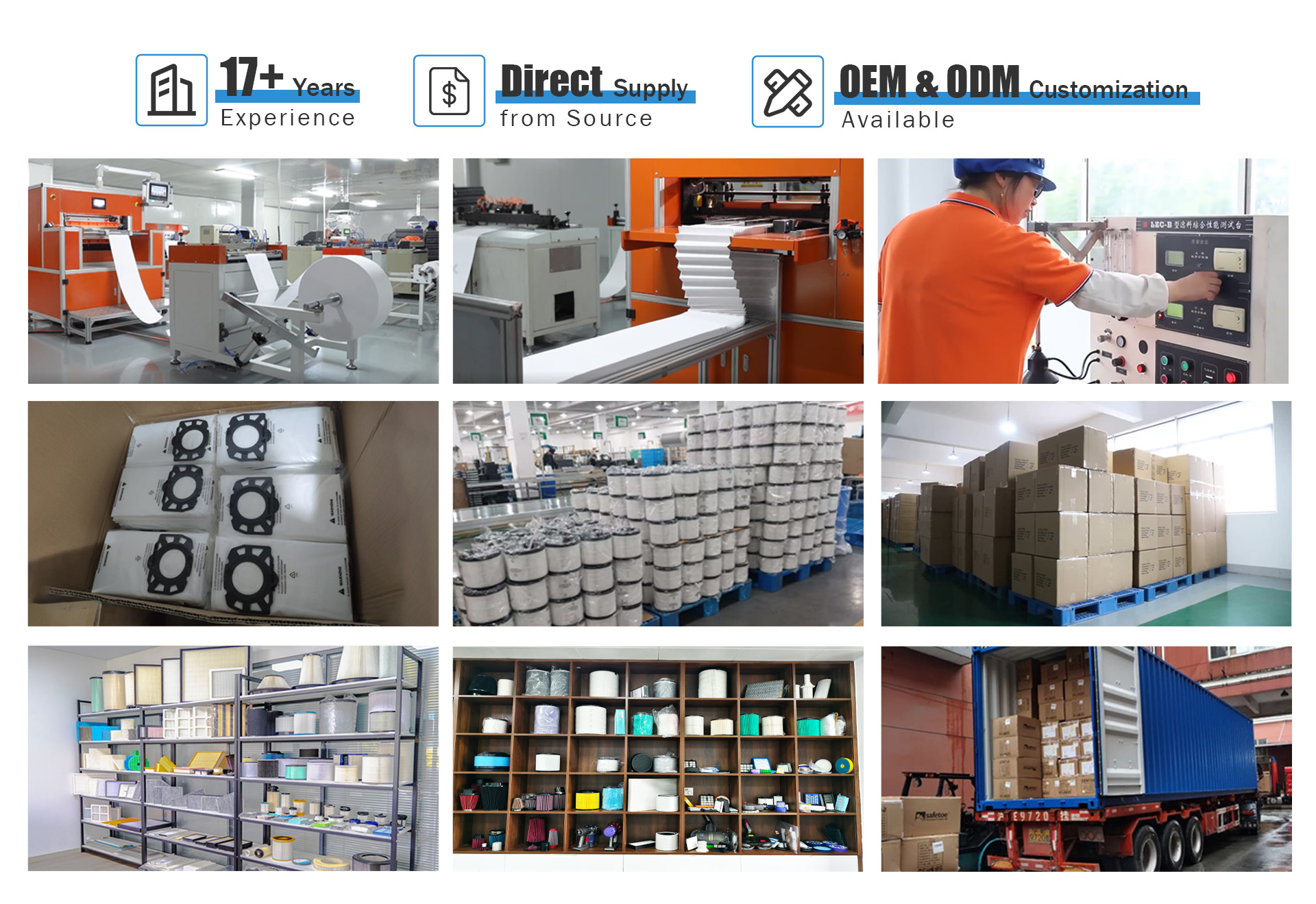
Blue Sky Filter supplies replacement parts and maintenance accessories for floor cleaning machines, including filters, deodorization modules and customized cleaning appliance components. We support sample development, size customization, material selection, label design and OEM/ODM packaging for buyers who need stable floor cleaner accessory supply.

If you want to see our updates in real time on social media, you can follow the following accounts.
LinkedIn: linkedin.com/company/blueskyfilter
Twitter: twitter.com/blueskyfilter
Facebook: www.facebook.com/blueskyfilter.manufacturer/
Youtube: www.youtube.com/@blueskyfilter
Instagram: https://www.instagram.com/nanjingblueskyfilters/