Introduction:How HEPA Vacuum Filters Improve Cleaning Performance and Indoor Air Quality
Vacuum cleaners have become an essential part of modern household and commercial cleaning systems. However, many users focus only on suction power while overlooking one of the most important components inside the machine - the vacuum filtration system.
A high-quality HEPA vacuum filter not only helps capture dust and debris, but also improves indoor air quality, protects vacuum cleaner motors, and maintains stable airflow performance. As air quality awareness continues to increase globally, efficient vacuum filtration systems are becoming increasingly important for homes, offices and industrial cleaning applications.
What Is a HEPA Vacuum Filter?
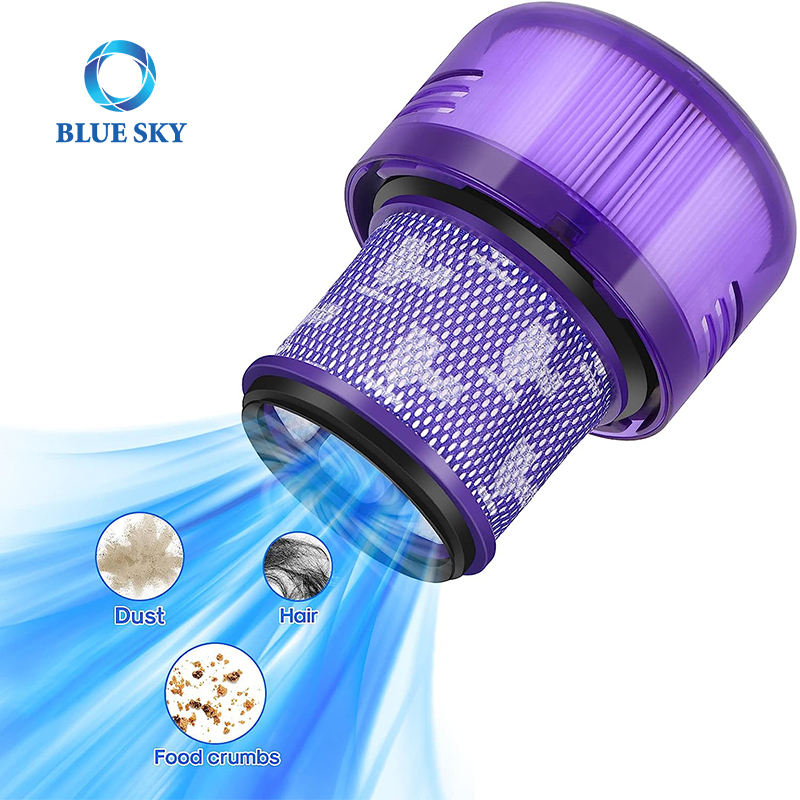
HEPA stands for High Efficiency Particulate Air. A HEPA vacuum filter is designed to capture extremely small airborne particles generated during vacuum cleaning.
Most H13 HEPA filters can remove up to 99.97% of particles as small as 0.3 microns, including:
Fine dust
Pollen
Pet dander
Mold spores
Airborne allergens
Smoke particles
Compared with ordinary foam or mesh filters, HEPA filtration systems provide much higher particle capture efficiency, especially for users with allergies, asthma or pets.
Modern vacuum cleaners often use multi-layer filtration systems combining:
Filter Layer
Main Function
Pre-filter
Captures large debris and hair
HEPA filter layer
Removes fine particles and allergens
Activated carbon layer
Reduces odors and smoke
Exhaust filter
Improves discharged air quality
This layered structure helps maintain stronger airflow while improving filtration performance.
Why Vacuum Filter Replacement Is Important
Many vacuum cleaner users continue using filters long after they become clogged with dust and debris. However, dirty filters can significantly reduce overall cleaning performance.
A clogged vacuum filter may cause:
Reduced suction power
Increased airflow resistance
Motor overheating
Dust leakage
Poor indoor air quality
Higher energy consumption
When airflow becomes restricted, the vacuum cleaner motor needs to work harder, which may shorten motor lifespan over time.
Regular vacuum filter replacement helps maintain:
Stable airflow
Better dust collection
Improved energy efficiency
Cleaner indoor environments
Longer vacuum cleaner lifespan
For most household applications, replacement vacuum filters are typically recommended every 3 to 6 months depending on cleaning frequency and environmental conditions.
How HEPA Filters Improve Indoor Air Quality
Indoor air pollution has become a growing concern in modern homes and workplaces. During vacuum cleaning, fine particles can easily become airborne again if filtration efficiency is insufficient.
HEPA vacuum filtration systems help reduce secondary air pollution by trapping microscopic particles inside the filter media before clean air is discharged back into the environment.
This is especially important for:
Homes with pets
Families with children
Allergy sufferers
Asthma patients
Commercial cleaning environments
Offices with high foot traffic
Efficient vacuum cleaner air filtration systems help reduce airborne contaminants and improve overall indoor comfort.
HEPA Filters vs Foam Filters
Different vacuum cleaner filtration systems use different filter materials depending on cleaning requirements and cost considerations.
Filter Type
Main Advantage
Typical Application
HEPA Filter
Fine particle filtration
Allergy control and fine dust cleaning
Foam Filter
Washable pre-filtration
General debris collection
Paper Filter
Low-cost filtration
Basic household cleaning
Activated Carbon Filter
Odor absorption
Pet and smoke environments
Many advanced vacuum cleaners combine multiple filter types to balance airflow performance and filtration efficiency.
How to Choose the Right Replacement Vacuum Filter
Selecting the correct replacement vacuum filter is important for maintaining vacuum cleaner performance and compatibility.
Buyers should consider the following factors:
Compatibility
Always confirm the filter matches the exact vacuum cleaner model and series.
Higher HEPA grades generally provide better fine particle filtration.
HEPA Grade
Filtration Efficiency
H10
85%
H11
95%
H12
99.5%
H13
99.95%
H14
99.995%
H13 HEPA filters are commonly used in high-performance vacuum cleaner systems.
Material Structure
Multi-layer nonwoven filter media can improve:
Dust holding capacity
Airflow stability
Durability
Filtration consistency
Washability
Washable vacuum filters may reduce long-term maintenance costs when cleaned properly.
However, excessive washing may gradually reduce filtration performance over time.
OEM Vacuum Filtration Solutions for Global Brands
As global demand for replacement vacuum filters continues to grow, many distributors and vacuum cleaner brands are seeking reliable OEM vacuum filter manufacturers.
Blue Sky Filter specializes in OEM and ODM vacuum filtration solutions for household and commercial cleaning systems.
Our manufacturing capabilities include:
HEPA filter production
Multi-layer filtration media
Custom dimensions
Private label packaging
Logo customization
Compatibility development
Bulk wholesale supply
We support replacement vacuum filter solutions for various cordless, robotic and upright vacuum cleaner systems worldwide.
Frequently Asked Questions:
How often should vacuum cleaner filters be replaced?
Most vacuum cleaner filters should be replaced every 3 to 6 months depending on usage frequency and dust conditions.Can dirty vacuum filters reduce suction power?